

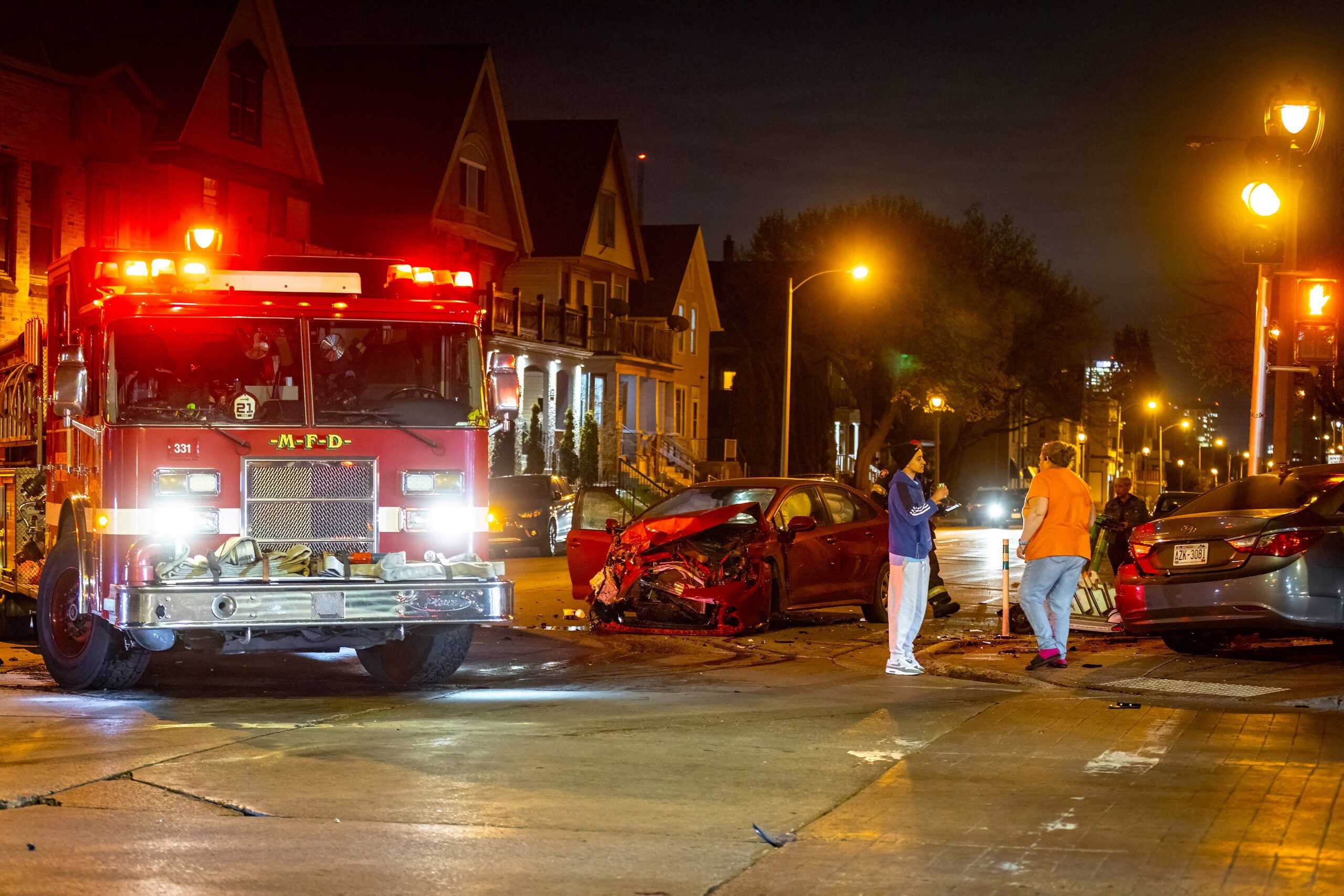
A car accident can shatter your sense of normal in seconds. Medical bills stack up, your vehicle may be totaled, and you might miss weeks of work while recovering from injuries someone else caused. If you’ve been hurt on the roads in Arlington, Texas, knowing who’s at fault and who pays for a car accident gives you a foundation to protect yourself and your future.
Texas law determines fault and payment based on specific rules, and those rules change depending on how an accident happened. Rear-end collisions, left-turn crashes, and multi-car pileups all follow different patterns of liability.
An experienced car accident attorney can review the facts of your case in a free consultation and help you take the right next steps.
Key Takeaways: Who Pays After a Car Accident in Texas
- Texas is a fault-based state, meaning the driver who caused the accident bears financial responsibility for damages.
- Modified comparative fault rules in Texas can reduce or eliminate your compensation if you are found to be 51% or more at fault.
- Rear-end collisions usually point to the trailing driver, but the lead driver can share fault under certain circumstances.
- Left-turn accidents almost always fall on the turning driver, though exceptions exist when the other driver ran a red light or was speeding.
- Multi-vehicle accidents require a careful review of each driver’s actions to determine how fault is shared among all parties.
Who’s at Fault and Who Pays for a Car Accident in Texas?
In Texas, the driver who caused the accident is responsible for paying damages, either through their insurance or out of pocket.
- Texas follows a fault-based system, meaning the at-fault driver’s liability insurance pays for injuries and property damage.
- If more than one driver shares fault, Texas uses modified comparative fault rules, which can reduce or eliminate your right to compensation depending on your percentage of fault.
- If the at-fault driver is uninsured, your own uninsured motorist coverage may step in, if you have it.
A car accident attorney can help you identify who is liable and pursue the full compensation you deserve.
Scenario 1: Who’s at Fault in a Rear-End Collision?
When one car strikes another from behind, the driver in the rear is almost always considered at fault. Texas law requires drivers to maintain a safe following distance and pay attention to traffic ahead.
Distracted driving, tailgating, and speeding are the most common reasons rear-end crashes happen near intersections like Cooper Street and Division Street in Arlington.
If you were stopped at a red light or slowing down for traffic when someone hit you from behind, the evidence almost always supports your claim.
When Can the Lead Driver Share Fault?
Sometimes, the driver in front carries partial responsibility. A court or insurer might assign some fault to the lead driver if they:
- Cut in front of another vehicle without enough space
- Reversed suddenly without warning
- Had brake lights that weren’t functioning
Even in these situations, the rear driver typically holds more fault. But if the lead driver’s actions contributed to the crash, modified comparative fault rules apply, and their compensation may be reduced accordingly.
What This Means for Your Claim
Insurance adjusters may try to argue that you, as the lead driver, made a sudden or unexpected move. Dashcam footage, witness statements, and vehicle inspection records can counter that argument.
A knowledgeable car accident attorney reviews all available evidence to build the strongest possible case for rear-end accident victims.
Scenario 2: Left-Turn Accidents, Who Is Usually Responsible?
The turning driver typically carries the fault. Left-turn accidents are among the most serious crashes on Arlington roads. Drivers turning left at intersections like Collins Street and Pioneer Parkway must yield to oncoming traffic before completing the turn.
Failing to yield is the leading cause of fault in these crashes, and Texas law places that duty squarely on the turning driver.
When Does the Oncoming Driver Share Fault?
The oncoming driver isn’t automatically in the clear. Fault may shift, partially or fully, to the other driver if they:
- Ran a red light or stop sign
- Were driving significantly above the posted speed limit
- Were driving under the influence of alcohol or drugs
These are real defenses that at-fault drivers and their insurers raise. Establishing that you, as the oncoming driver, followed traffic laws is often the key to securing full compensation.
Building Your Case After a Left-Turn Crash
Traffic signal data, accident reconstruction analysis, and witness testimony all play a role in proving fault in left-turn accidents. A focused attorney working on your behalf can request signal timing records from the city and hire reconstruction professionals to demonstrate exactly what happened and why the turning driver bears responsibility.
Scenario 3: Determining Fault in Multi-Vehicle Accidents?
Determining fault in multi-vehicle accidents requires examining every driver’s actions leading up to the collision. A chain-reaction crash on Interstate 20 near Arlington might involve three, four, or more vehicles, each contributing differently to the overall outcome. Fault doesn’t always rest with one driver.
Texas applies its comparative fault rules to every driver involved. Each person receives a percentage of fault, and those percentages must add up to 100%. One driver might be 70% at fault, another 20%, and a third 10%.
How Insurance Liability in Car Crashes Works Across Multiple Parties
Insurance liability in car crashes involving multiple vehicles means each driver’s insurer may pay a portion of your damages based on their policyholder’s assigned fault. This creates a web of competing claims and adjusters, all trying to minimize their company’s payout.
Managing multiple insurance companies at once, while recovering from serious injuries, puts significant strain on accident victims.
What Should You Do After a Car Crash?
After a car crash, your first priority is protecting your health and your legal rights by taking a few deliberate steps in the hours and days that follow.
Document Everything You Can
Physical evidence disappears quickly after a crash. If you’re physically able, photographing the scene from multiple angles preserves details that may matter later. Consider capturing:
- The position of all vehicles involved
- Visible damage to each car
- Road conditions, skid marks, and traffic signals
- Any visible injuries
If you can’t do this yourself, ask someone at the scene to help, or request that your attorney obtain any available traffic or surveillance camera footage later.
Seek Medical Care Promptly
Even if you feel relatively fine, seeing a doctor as soon as possible after the crash creates a medical record that ties your injuries directly to the accident. Symptoms from whiplash, concussions, and soft tissue injuries sometimes take days to fully appear.
A gap in medical care gives insurers an opening to argue your injuries weren’t serious, or weren’t caused by the crash at all.
Keep a Record of How Your Injuries Affect You
Writing down how your injuries affect your sleep, work, and daily routine may seem minor, but this kind of personal documentation carries real weight in a claim for pain and suffering. Note the dates, your symptoms, and any activities you couldn’t do because of your injuries.
Be Careful with Insurance Communications
Multiple insurers will likely contact you after a multi-car crash, each representing a different driver. Forwarding those communications to an attorney before responding can prevent you from unintentionally saying something that weakens your claim.
Adjusters are trained to gather information that limits their company’s payout, and you deserve someone in your corner doing the same for you.
Contact an Attorney
Reach out to a car accident attorney as soon as possible. They can handle all aspects of your claim and fight for full compensation for your injuries and losses.
How Does Texas Law Affect Fault Determination?
Texas uses a modified comparative fault system. That means each driver involved in a crash can be assigned a percentage of fault. If you’re found to be 50% or less responsible, you can still recover compensation, but your award gets reduced by your share of fault. If you’re found to be 51% or more at fault, you receive nothing.
If a jury finds your damages total $100,000, but you were 20% at fault, you’d recover $80,000. That 1% difference between 50% and 51% matters enormously.
What Evidence Shapes the Fault Decision?
Police reports, traffic camera footage, eyewitness statements, and physical evidence at the scene all factor into fault determinations. Insurance adjusters review this evidence to assign percentages of fault. Adjusters work for insurance companies, though, not for you.
Having a skilled attorney review the same evidence and advocate for your account of what happened can make a real difference in how fault gets assigned and how much you recover.
Who Pays after a Car Accident in Texas?
The at-fault driver’s insurance pays first. Texas requires drivers to carry minimum liability insurance: $30,000 per injured person, $60,000 per accident, and $25,000 for property damage.
When another driver causes your accident, you file a claim with their liability insurance. That insurer then investigates and either pays or disputes your claim.
What Happens When Insurance Falls Short?
Minimum coverage limits often don’t cover serious injuries. Medical treatment for broken bones, spinal injuries, or traumatic brain injuries can cost far more than $30,000. When that happens, you may need to explore:
- Your own underinsured motorist coverage, which pays the gap between the at-fault driver’s policy and your actual damages
- Uninsured motorist coverage, if the other driver had no insurance at all
- A personal injury lawsuit against the at-fault driver to recover what insurance won’t cover
Frequently Asked Questions About Who Pays After a Car Accident in TX
What if the other driver claims I was at fault?
That dispute goes through the insurance claims process and, if necessary, through the courts. Texas’s comparative fault rules allow both parties to assign percentages of fault. An attorney can gather evidence to support your account and challenge inaccurate fault assignments made by the other driver’s insurer.
How long do I have to file a car accident claim in Texas?
Texas gives most car accident victims two years from the date of the crash to file a personal injury lawsuit. Missing this deadline typically means losing your right to compensation, so acting promptly protects your options.
What if the at-fault driver’s insurance denies my claim?
A denial isn’t the end of the road. Insurers deny claims for many reasons, some legitimate and some not. An attorney can review the denial, respond with additional evidence, and pursue litigation if the insurer refuses to negotiate in good faith.
Can I still recover compensation if I wasn’t wearing a seatbelt?
Possibly, but not wearing a seatbelt may reduce your award. Texas law allows insurers and opposing parties to argue that your injuries were worsened by your failure to buckle up. The impact on your case depends on the specific injuries and how fault is ultimately assigned.
Does it matter if the at-fault driver was working at the time of the crash?
Yes, significantly. If the driver who hit you was on the clock for an employer, their employer may share liability under a legal doctrine called respondeat superior, which holds employers responsible for employee actions during the course of employment.
This can open access to a company’s insurance policy, which often carries much higher limits than a personal auto policy.
Injured in a Car Accident That Wasn’t Your Fault? We’re Here to Help
At Branch & Dhillon, P.C., we represent Arlington car accident victims who have been hurt through no fault of their own. We know the physical pain, financial pressure, and daily disruption that injuries from someone else’s negligence can cause. We believe you deserve an advocate who fights to make things right.
Our team brings real experience to car accident cases throughout the Arlington area, and we’re ready to put that experience to work for you. Whether your crash happened on a busy highway, at a local intersection, or in a parking lot, we’ll review your case, explain your options, and work hard to recover the compensation you’re owed.
Call us today for a free consultation at +1-817-533-3430. There’s no cost to speak with us, and no fee unless we recover compensation for you.