

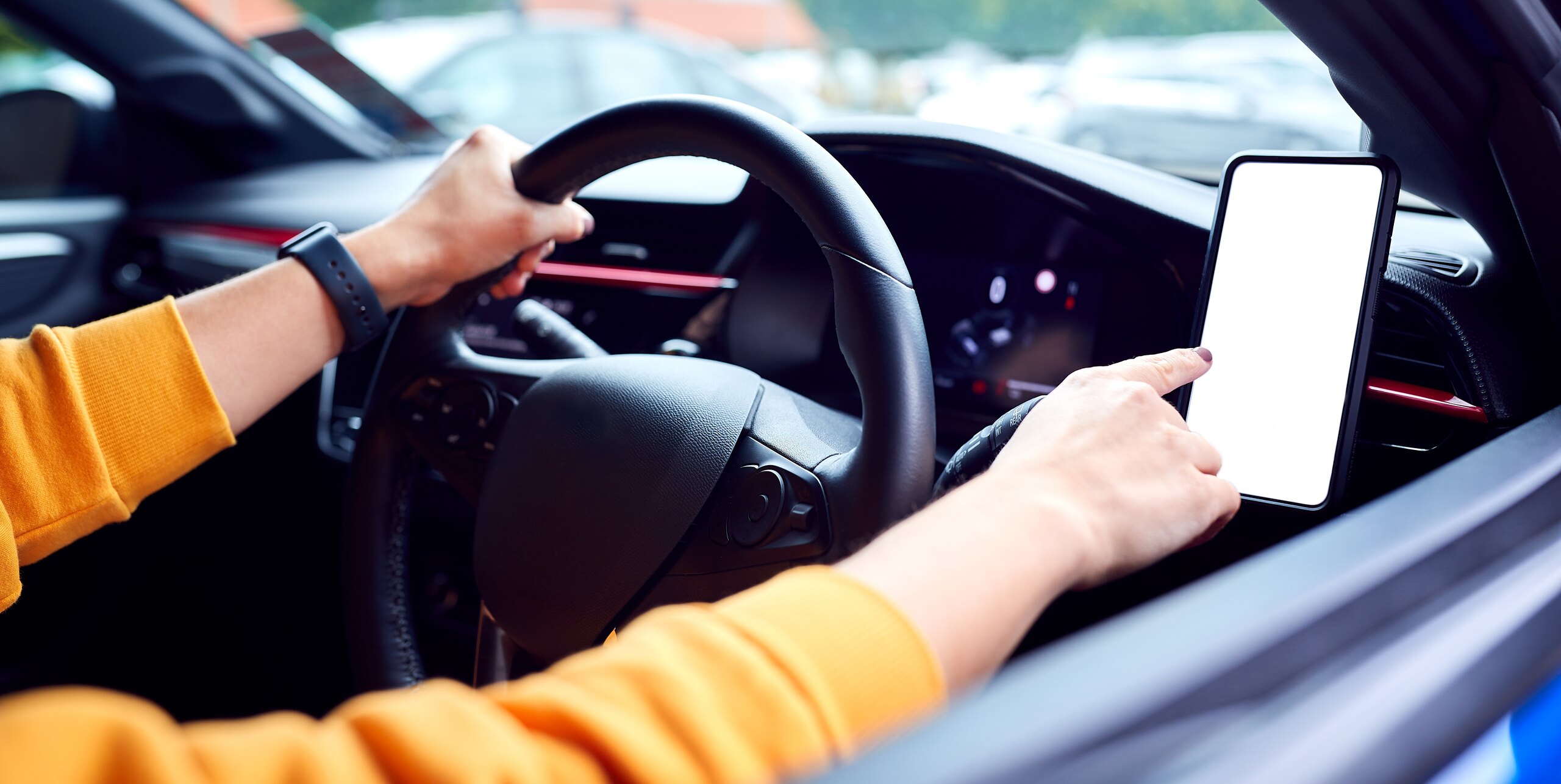
If you were hurt in a car accident in Arlington, TX, and you suspect the other driver wasn’t paying attention, you’re likely dealing with pain, medical bills, a damaged vehicle, and a life that looks nothing like it did before the crash.
Distracted driving is one of the leading causes of serious car accidents across the country, and Arlington’s busy roads and highways see more than their share of these collisions.
You deserve honest answers about what happened, who is responsible, and what your options are. A car accident attorney can review your case at no cost to you and help you decide on a path forward.
Key Takeaways: Distracted Driving Car Accidents
- Distracted driving involves any activity that pulls a driver’s attention, hands, or eyes away from the road, and all three types of distraction increase crash risk significantly.
- Texting while driving is especially dangerous because it combines visual, manual, and cognitive distraction simultaneously.
- Texas law gives injured victims a limited window of time to file a personal injury claim, so acting promptly matters.
- Compensation in a distracted driving case may cover medical expenses, lost wages, property damage, and pain and suffering.
- An experienced car accident attorney can investigate the crash, gather evidence of distraction, and advocate for the full value of your claim.
Quick Answer: What is distracted driving?
Distracted driving means operating a vehicle while your attention is divided between driving and something else, such as a phone, a conversation, or food.
- Any activity that takes your eyes off the road, your hands off the wheel, or your mind off driving counts as a distraction.
- Texting is one of the most dangerous forms because it combines all three types of distraction at once.
- Distracted driving causes thousands of deaths and hundreds of thousands of injuries in the United States every year.
A skilled car accident attorney can help you pursue compensation if a distracted driver caused your injuries.
What Counts as Distracted Driving?
Any activity that takes a driver’s focus away from operating a vehicle safely falls into the category of distracted driving. It includes far more than texting behind the wheel. Researchers and traffic safety officials typically sort distractions into three types: visual, manual, and cognitive.
Visual Distractions
A visual distraction causes a driver to take their eyes off the road. Glancing at a GPS screen, looking at a roadside billboard, or turning to check on a child in the backseat all count. Even a two-second glance away from the road at 60 miles per hour means a driver travels the length of nearly two basketball courts without watching where they’re going.
Manual Distractions
Manual distractions take a driver’s hands off the wheel. Eating, adjusting the radio, reaching for something in the back seat, or holding a phone all reduce a driver’s ability to respond quickly. Controlling a vehicle in an emergency requires both hands, and a driver with one hand occupied is already at a disadvantage.
Cognitive Distractions
Cognitive distractions are the hardest to see from the outside. A driver can have both hands on the wheel and eyes pointed forward while still being mentally somewhere else.
Daydreaming, talking on a hands-free phone, or processing an argument before a meeting all qualify. Studies show that cognitive distraction slows a driver’s reaction time even when they appear to be looking at the road.
What Are the Most Common Causes of Distracted Driving Accidents?
The causes of distracted driving accidents vary, but some behaviors show up in crash data again and again. Knowing what those behaviors are helps explain why so many Arlington collisions are preventable.
Texting and Smartphone Use
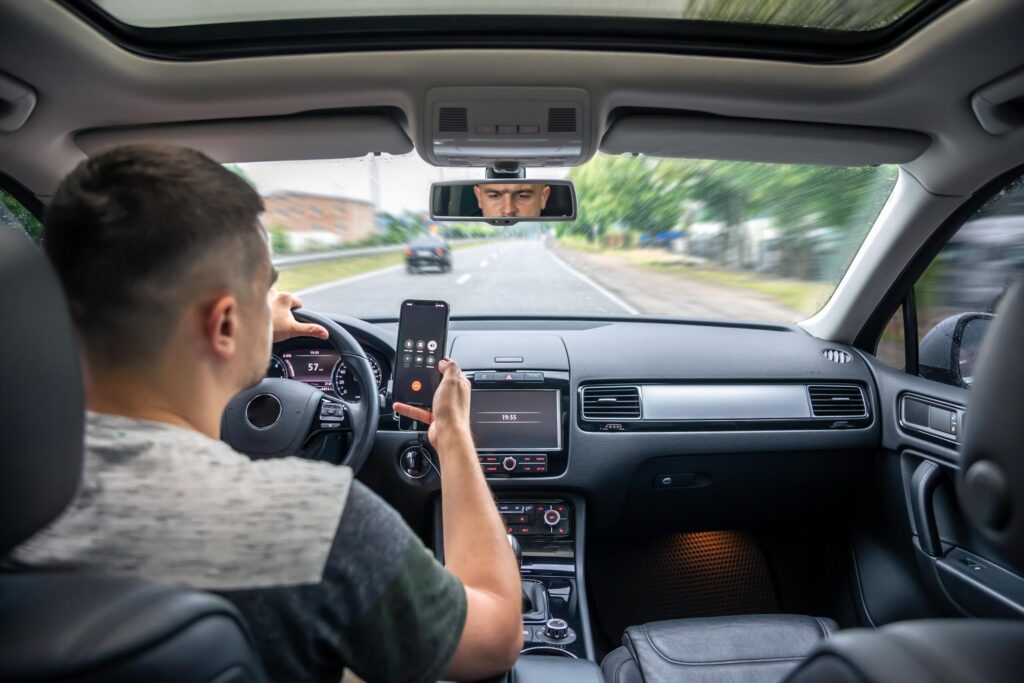
The texting while driving dangers are well-documented. Sending or reading a text takes a driver’s eyes off the road for an average of five seconds. At highway speeds, that’s enough time to travel the length of a football field without looking up.
Despite laws in Texas that ban handheld phone use while driving, phone-related distraction remains one of the top contributors to serious crashes.
In-Vehicle Technology
Modern vehicles come loaded with touchscreens, voice systems, and digital dashboards. While these features are designed to be convenient, they still require attention. Adjusting the climate control on a touchscreen or programming a navigation system mid-trip pulls focus away from the road in ways that older, simpler controls did not.
Passengers and Conversations
Conversations with passengers, especially emotionally charged ones, draw mental attention away from driving. Young drivers are particularly affected, with crash risk rising with each additional teen passenger in the vehicle.
Eating and Personal Grooming
Eating behind the wheel remains surprisingly common. Unwrapping food, drinking from a cup, or applying makeup all require at least one hand and some level of attention. These behaviors reduce a driver’s ability to react in time to sudden changes in traffic.
How Common Is Distracted Driving, and Where Does It Happen in Arlington?
Driver distraction is a very common concern. The National Highway Traffic Safety Administration (NHTSA) reports that distraction-related crashes killed 3,208 people in a recent year, and thousands more were injured.
In Texas, crashes involving distracted drivers occur at a higher rate than the national average, and Tarrant County, which includes Arlington, consistently ranks among the state’s busiest and most collision-prone counties.
High-Risk Roads and Intersections in Arlington
Distracted driving crashes happen everywhere, but certain road types and areas carry higher risk. Interstate 20, which cuts through Arlington and carries heavy traffic volumes, sees frequent rear-end and lane-change crashes consistent with driver inattention.
The stretch of Highway 360 near the entertainment district, with its mix of highway traffic and surface-level intersections, creates conditions where a momentary lapse in attention can lead to serious collisions.
Collins Street and Division Street, both busy commercial corridors, mix pedestrian traffic with vehicles making frequent turns and stops. Drivers distracted by phones or in-car technology near shopping centers and restaurant strips may not notice a pedestrian stepping off a curb or a driver braking suddenly ahead.
Parks Mall on South Cooper Street draws heavy traffic, particularly on weekends, and the parking lot exits and nearby signal-controlled intersections are common sites for low-speed but injury-causing crashes.
Six Flags Drive and the surrounding entertainment district roads carry surges of traffic on event days, increasing the risk that a distracted driver will miss a merge or fail to yield.
What Should You Do After a Distracted Driving Accident?
You need to take certain steps in the days and weeks following a distracted driving accident to protect your health and your right to compensation. Here’s what you should do:
Seek Medical Attention Right Away
Seeking medical attention promptly after a crash is one of the most consequential decisions an injured person can make, both for health reasons and for building a legal record. Even injuries that seem minor at the scene sometimes develop into serious conditions over the following days.
Having a documented medical evaluation creates a direct connection between the crash and your injuries.
Keep a Personal Injury Journal
Consider keeping a detailed record of how your injuries affect your life. Write down days you missed work, activities you could no longer do, and how your pain level changed over time.
This kind of personal documentation can support a claim for pain and suffering in ways that medical records alone cannot fully capture.
Preserve Evidence from the Scene
Preserving any evidence connected to the crash strengthens your position considerably. Photographs of vehicle damage, visible injuries, and the scene itself carry weight. If witnesses provided contact information at the scene, keeping that information accessible gives your attorney a place to start.
Be Careful on Social Media
Avoid posting about the crash on social media. Insurance adjusters routinely review the public accounts of claimants, and even an innocent post can be taken out of context during settlement negotiations.
Talk to an Attorney Before Giving a Statement
Speaking with a car accident attorney before giving a recorded statement to any insurance company gives you the benefit of legal guidance before you say something that could limit your claim.
How Can Attorneys Help Prove Distracted Driving?
Attorneys help prove distracted driving by gathering and preserving evidence that most people can’t access on their own, including phone records, camera footage, and expert analysis. Building this kind of case requires legal tools and experience that make a real difference in the outcome.
Phone Records and Electronic Evidence
A skilled attorney can request the at-fault driver’s phone records through the legal discovery process. These records can show whether the driver was texting, browsing, or on a call at the time of the crash.
Courts have allowed this type of evidence in distracted driving cases, and it can be among the most persuasive proof available.
Traffic and Surveillance Camera Footage
Arlington’s roadways, intersections, and commercial areas are covered by traffic cameras and private surveillance systems. Footage that captures a driver’s behavior in the moments before a crash can show lane drifting, failure to brake in time, or other behaviors consistent with distraction.
This footage sometimes disappears within days if it isn’t preserved quickly, which is one reason contacting an attorney promptly matters.
Witness Statements and Accident Reconstruction
Witnesses who saw a driver looking down at a phone or behaving erratically before the crash provide valuable firsthand accounts. In serious cases, accident reconstruction professionals can analyze the physical evidence from the scene to determine speed, braking patterns, and point of impact, helping build a clearer picture of what happened.
What Compensation May Be Available After a Distracted Driving Crash?
After a distracted driving crash, injured victims may be entitled to compensation covering medical expenses, lost wages, property damage, and the personal toll the injury takes on daily life. The financial impact of a serious car accident extends far beyond the initial emergency room visit, and a thorough claim accounts for both immediate and long-term losses.
Economic Damages
Economic damages cover losses with a specific dollar amount. Medical expenses, both past and future, form the foundation of most car accident claims. Lost wages from missed work, and reduced earning capacity if injuries affect a person’s ability to work long-term, also fall into this category. Property damage to the vehicle and related costs, such as rental car fees, are included as well.
Non-Economic Damages
Non-economic damages address losses that don’t come with a receipt. Pain and suffering, emotional distress, loss of enjoyment of activities, and the impact on close relationships all count. These damages are harder to calculate, but they often represent a substantial portion of a fair settlement.
Texas Comparative Fault Rules Affect Your Claim
Texas also follows a modified comparative fault rule. Under this rule, an injured person can still recover compensation even if they were partly at fault for a crash, as long as their share of fault doesn’t exceed 50 percent. The compensation awarded gets reduced by the percentage of fault assigned to the injured party.
An attorney who knows how insurance companies use this rule can help you counter unfair attempts to shift blame.
How Long Do You Have to File a Claim in Texas?
Texas law sets a two-year deadline for filing a personal injury lawsuit after a car accident. Missing this deadline generally means losing the right to pursue compensation entirely, regardless of how strong the case is.
Starting the process early gives an attorney the time needed to investigate the crash, gather evidence, and build a thorough claim.
Frequently Asked Questions About Distracted Driving Accident Claims
Can a driver be held liable for an accident if they were only distracted for a few seconds?
Yes. Even a brief distraction can form the basis for legal liability if it caused a driver to deviate from the standard of care owed to other road users. Seconds matter at highway speeds, and courts have found liability in cases where distraction lasted only a moment.
What if the distracted driver denies being on their phone?
A driver’s denial doesn’t end the inquiry. Phone records subpoenaed through the legal process can show call, text, and data activity at the time of a crash. Witness testimony and surveillance footage may also contradict a driver’s account.
Does Texas have a law against texting while driving?
Yes. Texas law prohibits drivers from reading, writing, or sending electronic messages while operating a vehicle. Violations can result in fines, and a citation for this offense can serve as evidence of negligence in a civil claim.
What if the insurance company offers a quick settlement?
Quick settlement offers from insurance companies often come before the full extent of injuries is known. Accepting a settlement typically releases the at-fault party from further liability, which means you can’t seek additional compensation later if your medical costs turn out to be higher than expected.
Can passengers injured in a distracted driving accident file a claim?
Yes. Passengers injured in a crash caused by a distracted driver generally have the right to pursue compensation from the at-fault driver’s insurance. Depending on the circumstances, a claim against multiple parties may also be possible.
Contact Branch and Dhillon, P.C. After a Distracted Driving Accident
At Branch & Dhillon, P.C., we understand what you’re going through. A crash caused by a distracted driver leaves you dealing with physical pain, financial pressure, and uncertainty about the future, all at once. Our team is experienced, knowledgeable, and focused on fighting for the compensation you deserve.
We represent car accident victims in Arlington and throughout the surrounding area. Our attorneys have handled distracted driving cases and know how to build claims that hold negligent drivers accountable. We work on a contingency fee basis, which means you pay nothing unless we recover compensation for you.
Call us today for a free consultation at +1-817-533-3430. We’re ready to listen, answer your questions honestly, and help you take the next step forward.