

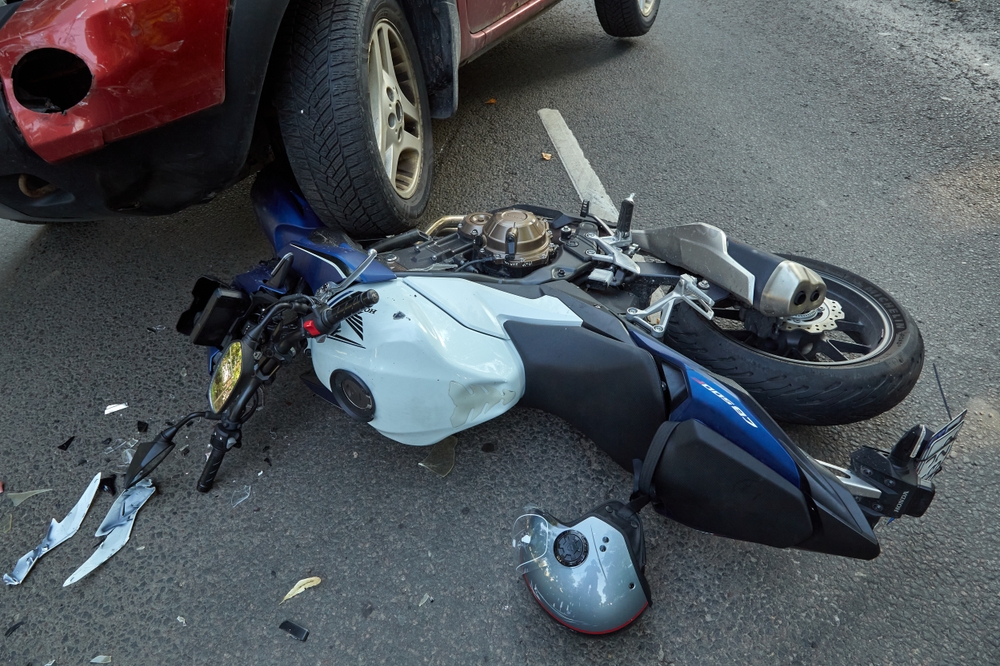
Riding a motorcycle offers a unique sense of freedom, but a crash can quickly shatter that feeling. After an accident, it’s natural to replay the events in your mind, and you might start to wonder if you did something wrong. Even if another driver was clearly reckless, you may worry that because you were going a little over the speed limit or changed lanes at the last second, you have no right to compensation. In Texas, this is not necessarily true; being partially at fault does not automatically prevent you from recovering damages for your injuries.
The law recognizes that accidents are often complex, and multiple factors can contribute to a collision. Speaking with a motorcycle accident lawyer can help you understand how these rules apply to your situation. If you’ve been involved in a motorcycle accident, understanding how Texas handles these situations can help you protect your rights and secure the resources you need to get back on your feet.
Key Takeaways about if You’re Partly to Blame for Your Motorcycle Accident Injuries
- Texas law allows an injured person to seek compensation even if they are partially responsible for an accident.
- The state follows a “modified comparative fault” rule, meaning a person can recover damages as long as their share of the blame is 50% or less.
- The amount of compensation an injured party receives is reduced by their percentage of fault.
- Insurance companies often attempt to shift blame onto motorcyclists to reduce or deny their claims.
- Evidence such as police reports, witness testimony, and traffic footage is used to determine each party’s percentage of responsibility.
- An attorney can help investigate the crash, challenge unfair blame, and advocate for a fair allocation of fault.
Understanding Comparative Negligence in Texas
When more than one person’s actions contribute to an accident, Texas courts use a legal principle called “comparative negligence” to assign fault. This system is designed to create a fairer outcome than older, harsher rules that would deny any compensation if a person was found even 1% responsible.
Texas specifically follows a “modified comparative fault” rule, sometimes called the 51% bar rule.
Here is a simple breakdown of what that means for you:
- If you are found 0% to 50% at fault: You can still recover financial damages from the other party. However, your total award will be reduced by your percentage of fault.
- If you are found 51% or more at fault: You are barred from recovering any compensation from the other party.
Think of fault as a pie chart. The court or insurance companies will look at all the evidence to decide how big each person’s slice of the “blame pie” is. As long as your slice is not bigger than the other party’s slice (or slices combined), you can still receive help for your losses.
How is Fault Determined in a Texas Motorcycle Accident?
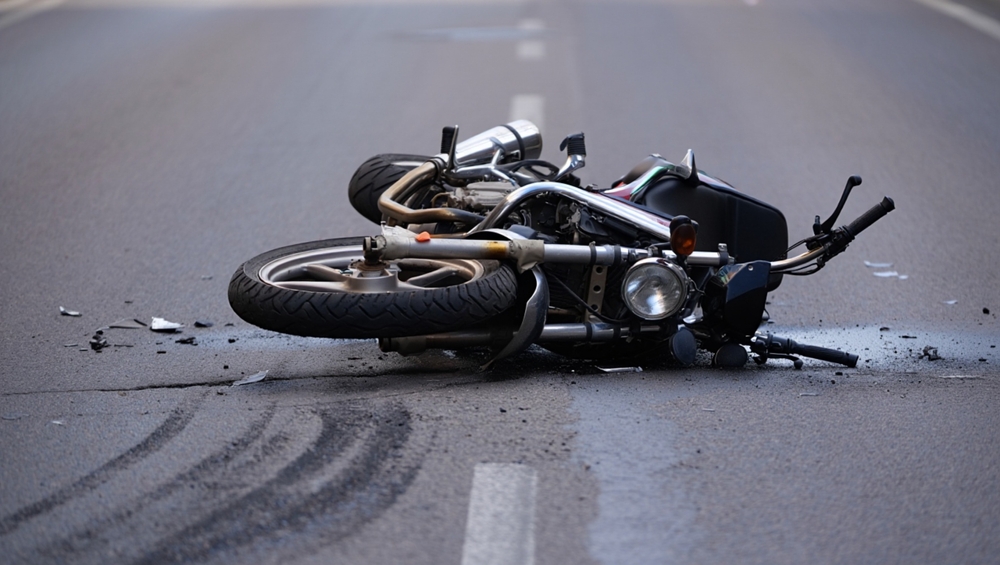
Assigning a percentage of fault isn’t just guesswork. It is a detailed process that involves gathering and analyzing all available evidence from the crash. Insurance adjusters and legal teams will investigate the collision to build a timeline of events and identify negligent actions.
Key pieces of evidence often include:
- The official police report: This document contains the responding officer’s initial observations, diagrams of the scene, and sometimes their opinion on contributing factors.
- Statements from witnesses: People who saw the accident happen can provide neutral, third-party accounts of what they observed.
- Photos and videos: Pictures of the vehicles, skid marks, road conditions, and any nearby traffic or security camera footage can be incredibly revealing.
- Accident reconstruction analysis: In complex cases, professionals may be brought in to use physics and engineering principles to recreate the accident and determine factors like speed and points of impact.
- Vehicle data recorders: Similar to an airplane’s “black box,” many modern cars and some motorcycles record data about speed, braking, and steering right before a crash.
Each piece of this puzzle helps create a clearer picture of what happened, allowing for a more accurate and fair determination of fault for everyone involved.
Common Scenarios Where a Motorcyclist Might Be Found Partially at Fault
There’s a persistent and unfair bias that motorcyclists are inherently reckless. Insurance companies know this and often use it to their advantage, trying to place blame on the rider whenever possible. A rider could be found partially responsible for a variety of reasons, even if the other driver made the critical error that caused the crash.
Some common situations include:
- Speeding: Even traveling just five or ten miles per hour over the speed limit can be used to assign a portion of the blame to you.
- Lane Splitting: While Texas law doesn’t explicitly forbid or allow lane splitting (riding between two lanes of traffic), it is a controversial practice. If you were lane splitting when the accident occurred, an insurer will almost certainly argue it was an unsafe maneuver that contributed to the collision.
- Improper Turns or Lane Changes: Failing to use a turn signal or making a sudden lane change without checking blind spots could lead to a finding of partial fault.
- Equipment Issues: Something as simple as a burned-out brake light or tail light could be used to argue that your motorcycle was not visible enough to other drivers on the road.
It is important to remember that these actions do not automatically disqualify you from getting help. They are simply factors that will be considered when dividing responsibility for the accident.
How Does Partial Fault Affect My Compensation?
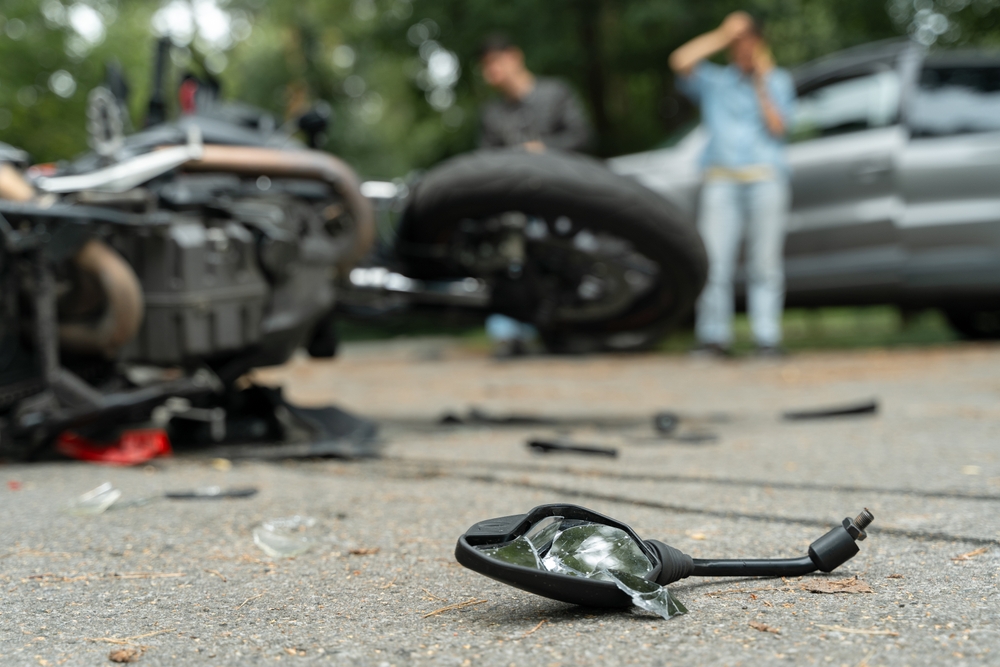
The most direct impact of being found partially at fault is a reduction in the financial compensation you receive. The math is straightforward: your total damages are calculated, and then that amount is reduced by your percentage of blame.
Let’s use an example. Suppose you were in a motorcycle accident on State Highway 360 in Arlington. After a thorough investigation, it is determined that the other driver was 80% at fault for running a red light, but you were 20% at fault for speeding. The total damages for your medical bills, lost income, and pain and suffering are calculated to be $100,000.
Here’s how the 20% fault assigned to you would affect the outcome:
- Total Damages: $100,000
- Your Percentage of Fault: 20%
- Reduction Amount: $100,000 x 0.20 = $20,000
- Your Final Compensation: $100,000 – $20,000 = $80,000
If, however, the fault was determined to be 51% yours, you would receive nothing under Texas law. This is why fighting against an unfair assignment of blame is so critical. Every percentage point the insurance company can shift onto you directly reduces the amount of money they have to pay.
This reduction applies to all types of compensation, including:
- Past and future medical expenses
- Lost wages/income and diminished earning capacity
- Pain and suffering
- Motorcycle repair or replacement costs
Because so much is on the line, insurance adjusters are highly motivated to find any reason, no matter how small, to increase your share of the fault.
The Insurance Company’s Tactics and Why Your Words Matter
Soon after a motorcycle accident, you will likely receive a call from the other driver’s insurance adjuster. They may sound friendly and concerned, but it is their job to protect their company’s bottom line. Their goal is to close your claim for the lowest possible amount.
One of their primary tactics is to get you to say something that can be interpreted as an admission of fault. They may ask leading questions in a recorded statement, such as, “Were you in a hurry to get somewhere?” or “Is it sometimes hard to see cars from your motorcycle?” An innocent or polite response can be twisted and used against you later.
Motorcyclists often face an uphill battle due to negative stereotypes. However, a significant number of motorcycle crashes involve other vehicles violating the rider’s right-of-way. Despite this, adjusters may still try to imply that because you were on a motorcycle, you must have been riding aggressively.
It is highly advisable to avoid giving a recorded statement or discussing the details of the accident with an insurance adjuster until you have had the chance to consult with an attorney. What you say in those early conversations can have a lasting impact on your ability to receive fair compensation.
Why a Skilled Attorney is Crucial When Fault is Shared

When there is a question of shared fault, the strength of your case depends entirely on the evidence. An experienced motorcycle accident attorney can be your greatest advocate in the fight for a fair outcome. They know the tactics insurance companies use and can counter them effectively.
A dedicated legal team can help by:
- Conducting an Independent Investigation: They can move quickly to preserve crucial evidence, find and interview witnesses, and obtain any available video footage before it is erased.
- Hiring Experts: Your attorney can retain accident reconstructionists to analyze the physical evidence and provide an expert opinion on how the crash occurred and who was truly at fault.
- Handling All Communications: They will take over all conversations with the insurance companies, protecting you from saying something that could damage your case.
- Building a Strong Case: They will compile all the evidence to present a compelling argument that minimizes your percentage of fault while holding the other driver accountable for their actions.
- Negotiating a Fair Settlement: Armed with strong evidence, your attorney can effectively negotiate with the insurer to fight for the maximum compensation possible under the law.
Having a professional on your side levels the playing field and sends a clear message to the insurance company that you will not accept an unfair allocation of blame.
Shared Fault in a Motorcycle Accident FAQs
Here are answers to some common questions that arise when a motorcyclist fears they may share some responsibility for a crash.
A police report is an important piece of evidence, but it is not the final word. The officer’s conclusion is their opinion based on the evidence available at the scene. Sometimes, these initial conclusions are incorrect or incomplete. An attorney can investigate further and challenge the findings in the report if there is evidence to the contrary.
In Texas, riders over 21 may legally ride without a helmet if they meet certain health insurance and safety course requirements. However, if you suffered a head injury, the defense may argue that your failure to wear a helmet contributed to the severity of your injuries. This is known as the “doctrine of mitigation of damages,” but it should not impact who was at fault for causing the crash itself.
In Texas, the statute of limitations for personal injury claims is generally two years from the date of the accident. If you do not file a lawsuit within this timeframe, you will likely lose your right to seek compensation forever. It is important to act promptly to protect your rights.
It is best to avoid speaking with the other driver’s insurer without first consulting an attorney. They are trained to elicit information that can be used to undervalue or deny your claim. You can politely decline to give a statement and refer them to your legal representative.
This is a classic example of shared fault. The other driver’s intoxication is extremely serious negligence, and they will likely bear the vast majority of the fault. However, your speeding could still result in you being assigned a small percentage of blame, which would slightly reduce your final compensation. You would still be eligible for a significant recovery as long as your fault did not exceed 50%.
Let Us Fight for the Compensation You Deserve

Worrying about being partially to blame for your motorcycle accident can add a heavy burden to an already difficult recovery. You don’t have to face this challenge by yourself. At Branch & Dhillon, P.C., our dedicated Tarrant County attorneys focus on helping people injured in accidents. We understand the biases motorcyclists face and are prepared to build a strong, evidence-based case to protect your rights.
Our personal injury lawyers will handle the legal details and fight back against the insurance companies so you can focus on what matters most—healing. Because we work on a contingency fee basis, you won’t pay us anything unless we successfully recover compensation for you. Contact Branch & Dhillon, P.C. today at (817) 533-3430 or through our online form for a free, no-obligation consultation to discuss your case and learn how we can help.