

The semi-truck merged without warning on I-30, forcing your car off the road and into the barrier. Or maybe the 18-wheeler jackknifed in the rain, creating a crash scene involving multiple vehicles.
Tractor-trailer accidents differ fundamentally from passenger vehicle collisions and not just in severity, though catastrophic injuries and fatalities occur far more frequently, but in the legal complexity that follows. Multiple parties share potential liability, federal regulations govern operations, and trucking companies deploy aggressive legal teams immediately after crashes to protect their interests.
At Branch & Dhillon, P.C., our truck accident attorneys represent injured victims throughout Arlington, Tarrant County, and the Dallas-Fort Worth metroplex who face the challenge of holding commercial carriers accountable after devastating crashes. Contact us for a free consultation.
Key Takeaways for Tractor-Trailer Accident Claims
- Tractor-trailer accidents typically involve multiple liable parties beyond just the driver, including trucking companies, maintenance providers, cargo loaders, leasing companies, and sometimes parts manufacturers, each with separate insurance policies
- Federal regulations governing commercial trucking create legal duties that don’t exist in regular car accident cases, including hours-of-service limits, mandatory maintenance schedules, driver qualification requirements, and cargo securement standards that provide liability frameworks when violated
- Critical evidence in tractor-trailer cases includes electronic logging device data, black box information, maintenance records, driver qualification files, and dispatch communications that trucking companies must preserve but frequently attempt to destroy or hide after crashes
- Common types of tractor-trailer crashes suggest specific liability theories based on driver error, maintenance failures, improper loading, or vehicle defects, which investigation and expert analysis can establish
- Texas’s two-year statute of limitations and the need for immediate evidence preservation make early attorney involvement critical
Understanding Tractor-Trailer Terminology

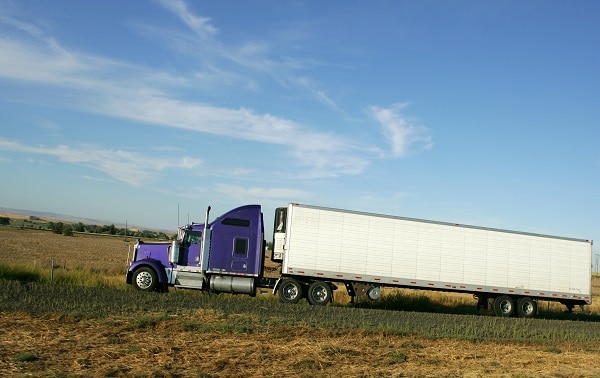
The terms “tractor-trailer,” “semi-truck,” and “18-wheeler” all generally refer to the same vehicle configuration: a tractor (the powered cab where the driver sits) pulling a trailer (the cargo-carrying unit). These combinations constitute the large commercial trucks seen on highways throughout Arlington and the DFW metroplex, hauling freight across Texas and the nation.
Tractor-trailers can have various configurations. The most common is the standard semi-trailer pulled by a single tractor. Some operations use doubles (two trailers) or triples (three trailers), though these configurations face restrictions on certain roads.
The “18-wheeler” terminology comes from the typical wheel count: ten wheels on the tractor (two front steering wheels and eight drive wheels) plus eight wheels on the trailer.
Other commercial truck types also cause serious accidents. Straight trucks (also called box trucks) have the cargo area permanently attached to the cab rather than being a separate trailer. Dump trucks, tanker trucks, and concrete mixers serve specialized purposes but share many of the same legal frameworks governing liability when crashes occur.
For legal purposes, these vehicles fall under federal commercial motor vehicle (CMV) regulations when they meet weight thresholds or transport certain cargo types. These federal regulations create duties and documentation requirements that don’t apply to passenger vehicles, forming the foundation for many truck accident liability claims.
Who Can Be Held Liable After a Tractor-Trailer Accident
Tractor-trailer accident liability extends far beyond the driver. Multiple parties potentially share responsibility, each carrying separate insurance coverage that affects total compensation available:
- Truck drivers: Bear primary liability when negligent driving, speeding, distracted driving, hours-of-service violations, unsafe lane changes, following too closely, or impaired driving causes crashes, though most can’t personally compensate catastrophic injuries.
- Trucking companies and motor carriers: Face vicarious liability under respondeat superior for employee drivers’ negligence, plus direct liability for negligent hiring (inadequate driver screening), negligent training (insufficient preparation), negligent supervision (failing to monitor performance), and negligent retention (keeping dangerous drivers employed).
- Maintenance providers: May be liable when negligent repairs or inspections miss defects that cause mechanical failures leading to crashes, particularly when trucking companies outsource maintenance to third-party shops.
- Cargo loaders and shippers: Face liability when improper loading creates hazards through overweight cargo, improperly secured loads, or unbalanced weight distribution that contributes to loss of control or rollover crashes.
- Leasing companies: That lease trucks to carriers or owner-operators may share liability depending on lease terms and maintenance responsibility allocation.
- Parts manufacturers: Face product liability exposure when defective components, brakes, tires, steering systems, and coupling devices fail and cause crashes.
Identifying all potentially liable parties requires thorough investigation. Our Arlington personal injury lawyers obtain driver qualification files, carrier safety ratings, maintenance records, cargo documentation, lease agreements, and corporate structure information to determine who bears responsibility and what insurance coverage applies.
Common Types of Tractor-Trailer Accidents in Arlington

Certain crash patterns appear repeatedly in tractor-trailer accidents, each suggesting specific causes and liability theories:
- Jackknife accidents: Occur when the trailer swings out from behind the tractor, forming a V-shape that blocks multiple lanes, typically resulting from hard braking on slippery surfaces, brake defects, or improper braking technique.
- Underride crashes: Happen when smaller vehicles slide underneath tractor-trailers (rear or side underride), causing the passenger car’s roof to shear off or collapse into the occupant compartment and producing severe head trauma or fatalities despite federal underride guard regulations.
- Rollover accidents: Result from excessive speed on curves, improper cargo loading creating a high center of gravity, sudden steering movements, or tire blowouts that cause loaded trailers to tip when lateral forces overcome stability.
- Wide turn accidents: Occur when tractor-trailers making right turns swing wide to accommodate the trailer’s turning radius, squeezing vehicles positioned to the right between the trailer and the curb when drivers fail to check mirrors.
- Rear-end truck crashes: Happen when trucks strike slower or stopped traffic from behind due to following too closely, speeding, driver distraction, or brake failures, with the massive weight and momentum of loaded trailers making quick stops difficult.
- Tire blowout accidents: Cause loss of control when tire failures occur at highway speeds due to inadequate maintenance, overloading, worn treads, or manufacturing defects, particularly when front steering tires or multiple tires fail simultaneously.
- Lost load accidents: Occur when improperly secured cargo falls from trailers into traffic, creating road hazards that cause multi-vehicle crashes despite federal cargo securement regulations.
Critical Evidence in Tractor-Trailer Accident Cases
Tractor-trailer accident cases depend on evidence that doesn’t exist in regular car crashes. Federal regulations require commercial carriers to maintain extensive documentation, and electronic systems record data that proves or disproves liability claims:
- Electronic Logging Device (ELD) data: Tracks driver hours-of-service compliance, recording driving time, on-duty time, and rest periods, revealing whether drivers violated hours-of-service limits or carriers pressured drivers to falsify logs.
- Black box data: From engine control modules (ECMs) records vehicle speed, brake application, throttle position, and other operational parameters in the seconds before crashes, definitively establishing whether drivers were speeding or failed to brake.
- Maintenance and inspection records: Document whether carriers performed required maintenance and safety inspections, with missing records, forged signatures, or patterns of deferred maintenance establishing negligence when mechanical failures cause crashes.
- Driver qualification files: Contain licenses, medical certificates, driving records, training documentation, and prior crash history that carriers must maintain, supporting negligent hiring claims when drivers have poor safety records or inadequate training.
- Pre-trip and post-trip inspection reports: Completed by drivers, document vehicle conditions, proving knowledge of dangerous conditions when drivers note defects but carriers fail to repair them.
- Dispatch records and communications: Reveal whether carriers pressured drivers to violate hours-of-service rules, skip inspections, or drive in unsafe conditions to meet delivery deadlines through text messages, emails, and recorded calls.
- Load documentation: Includes bills of lading, weight tickets, and cargo manifests showing what was loaded, how much it weighed, and how it was secured, establishing liability when overweight loads or improper securement contribute to loss of control.
Our truck crash lawyers send preservation letters immediately upon retention, demanding that carriers maintain all electronic data, physical evidence, and documentation related to the crash.
Common Causes of Tractor-Trailer Accidents
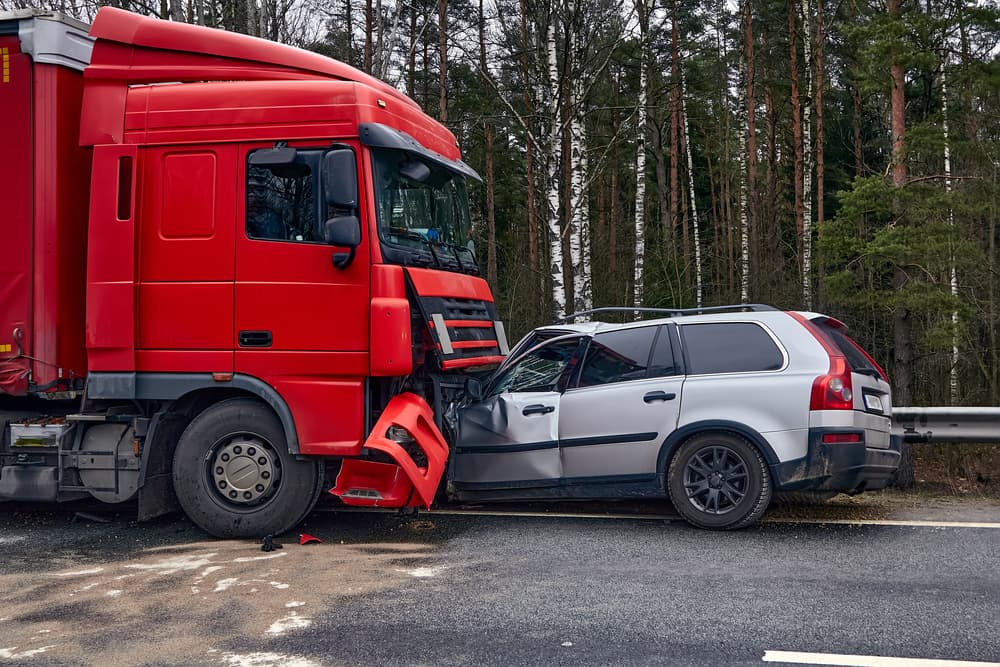
Federal Motor Carrier Safety Administration (FMCSA) studies identify recurring factors in tractor-trailer crashes, many involving regulatory violations that establish negligence:
- Driver fatigue: From hours-of-service violations remains pervasive despite ELD requirements, with fatigued drivers exhibiting impaired reaction times and reduced attention equivalent to alcohol impairment when carriers pressure them to push beyond legal limits.
- Distracted driving: Affects commercial drivers despite federal regulations prohibiting texting while driving, with GPS adjustments, dispatch communications, eating, and general inattention causing crashes when momentary lapses at highway speeds cover hundreds of feet.
- Speeding and unsafe speeds for conditions: Contribute to numerous crashes when drivers exceed limits or fail to reduce speed for rain, fog, or heavy traffic, eliminating safety margins needed to avoid collisions, given tractor-trailers’ much longer stopping distances.
- Inadequate training: Leaves drivers unprepared to handle emergency situations, adverse weather, mountain grades, or high-traffic urban environments when carriers rush drivers through training or fail to provide specialized instruction.
- Substance impairment: Involving alcohol or drugs produces devastating results despite federal regulations imposing strict blood alcohol limits (0.04%) and mandatory drug testing.
- Inadequate maintenance: Causes brake failures, tire blowouts, steering defects, and other mechanical problems when carriers cut maintenance costs or keep trucks in service despite known defects.
- Improper loading: Creates instability, weight distribution problems, and cargo securement failures, with overweight loads stressing braking systems and improperly secured cargo shifting during transit to cause rollovers or loss of control.
These contributing factors appear repeatedly in crash data, demonstrating that many tractor-trailer accidents result from preventable violations rather than unavoidable circumstances.
How Branch & Dhillon, P.C.’s Texas Truck Accident Lawyers Help
Trucking companies employ defense firms that handle hundreds of truck accident cases. They are familiar with the regulations, understand the evidence, and may use aggressive tactics to minimize liability. Facing these opponents without experienced representation places injury victims at a severe disadvantage.
At Branch & Dhillon, P.C., we take on the full scope of tractor-trailer accident investigation and litigation. We send immediate preservation demands. We obtain and analyze ELD data, black box information, and maintenance records. When necessary, our attorneys work with accident reconstruction experts, trucking industry specialists, and medical professionals who establish both liability and damages.
Our experience with federal motor carrier regulations allows us to identify violations that general practice attorneys might miss. We understand how to interpret driver logs, qualification files, and vehicle inspection reports. We know which experts provide credible testimony that juries find persuasive.
When trucking companies and their insurers refuse a reasonable settlement, we prepare cases for trial. Insurance companies take claims more seriously when they recognize thorough preparation and willingness to present evidence to juries.
FAQ About Texas Tractor-Trailer Accidents
Don’t provide recorded statements or sign releases without attorney representation. Trucking company insurers employ trained adjusters who use statements to develop defenses. Early contact aims to secure admissions before you understand the extent of the injury or consult with legal counsel. Politely decline and contact an experienced truck accident attorney immediately.
Texas usually imposes a two-year statute of limitations for most personal injury claims. Wrongful death claims face a two-year deadline from the date of death. Missing this deadline bars you from pursuing compensation in court regardless of liability strength, making prompt legal consultation critical even while receiving ongoing medical treatment.
When multiple defendants share liability, Texas law follows joint and several liability principles, meaning each defendant may be responsible for the full amount of damages regardless of their individual fault percentage, though they can seek contribution from other defendants based on proportionate responsibility.
Yes, as long as your fault stays below 51 percent. Texas modified comparative negligence reduces your damages proportionally by your fault percentage. At 51 percent fault or higher, Texas law bars all recovery. Defendants may aggressively argue comparative fault, making thorough evidence preservation and effective liability arguments critical.
Don’t accept direct payments or sign any paperwork without consulting an attorney first. These payments often come with releases that waive your right to pursue additional compensation. Accepting even small payments can jeopardize your ability to recover compensation for ongoing medical treatment, lost wages, and pain and suffering.
Holding Trucking Companies Accountable After Serious Crashes
Hours-of-service limits, mandatory maintenance schedules, driver qualification standards, and cargo securement regulations exist to prevent the crashes that happen when commercial operations prioritize schedules over safety. When violations occur and crashes follow, trucking companies move quickly to protect their interests through sophisticated legal teams and insurance companies.
At Branch & Dhillon, P.C., we represent tractor-trailer accident victims throughout Arlington, Tarrant County, and the Dallas-Fort Worth area. We investigate which regulations were violated, secure evidence before it disappears, and build cases that hold negligent carriers accountable.
Contact us today for a free consultation. You pay no fees, unless we recover compensation.