

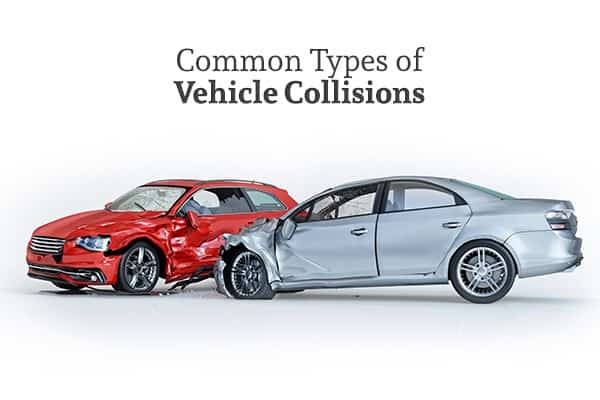
Rear-end collisions at stoplights, T-bone crashes at busy intersections, and head-on collisions from wrong-way drivers. Car accidents follow predictable patterns that affect liability determinations and injury outcomes.
When insurance adjusters ask what “kind” of crash occurred, they’re not making small talk. Collision type shapes their initial fault assessment, influences which evidence they’ll scrutinize, and often determines whether they open negotiations fairly or prepare to dispute your claim from day one.
At Branch & Dhillon, P.C., our car accident attorneys represent injured drivers and passengers throughout Arlington, Tarrant County, and the Dallas-Fort Worth metroplex. We investigate crash circumstances, gather evidence establishing fault, and hold negligent drivers accountable. Contact us for a free consultation.
Key Takeaways for Car Accident Types in Texas
- Rear-end collisions, intersection crashes, and side-impact accidents represent the most common crash types in Arlington and throughout Texas
- Crash type may suggest fault scenarios, with rear-end collisions generally indicating following driver liability, T-bone crashes suggesting failure-to-yield violations, and head-on collisions often involving wrong-way drivers, distracted driving, or impaired operation
- Different collision types produce predictable injury patterns based on impact forces and direction, with rear-end crashes causing whiplash, T-bone collisions producing side-impact injuries, and head-on crashes resulting in severe trauma
- The Texas Peace Officer’s Crash Report documents collision type, contributing factors, and officer fault determinations that insurance companies consider when evaluating claims
- Evidence requirements vary by crash type; an experienced car accident lawyer at Branch & Dhillon, P.C. can identify and gather evidence to build a strong claim
Rear-End Collisions: The Most Common Crash Type
Rear-end collisions occur when one vehicle strikes another from behind. These accidents happen frequently at stoplights, in stop-and-go traffic, and when vehicles slow or stop unexpectedly on highways. The struck vehicle’s occupants experience forward-then-backward head and neck movement that strains soft tissues and can herniate spinal discs.
Causes
Common causes include following too closely (tailgating), distracted driving from phone use or other inattention, speeding or failure to reduce speed for traffic conditions, brake failure or other mechanical defects, and impaired driving affecting reaction time and judgment.
Injuries
Typical injuries include:
- Whiplash and neck strain
- Back injuries like herniated discs
- Head injuries from striking headrests or being rear-ended at high speed
- Seat belt injuries, including chest and shoulder bruising
Liability
Liability considerations generally favor the rear driver bearing fault. Texas law requires drivers to maintain safe following distances and control speed to avoid rear-ending vehicles ahead.
However, the front driver may share fault if they stopped suddenly without reason, had non-functioning brake lights, or reversed unexpectedly. Sudden stops for legitimate reasons, such as avoiding pedestrians, obeying traffic signals, and responding to road hazards, don’t usually create front-driver liability.
Evidence
Evidence proving rear-end collision fault includes photographs showing rear vehicle damage and front vehicle impact location, police crash reports documenting the collision, witness statements about traffic flow and sudden stops, and dashcam footage showing following distance and brake light activation.
T-Bone and Side-Impact Crashes at Intersections
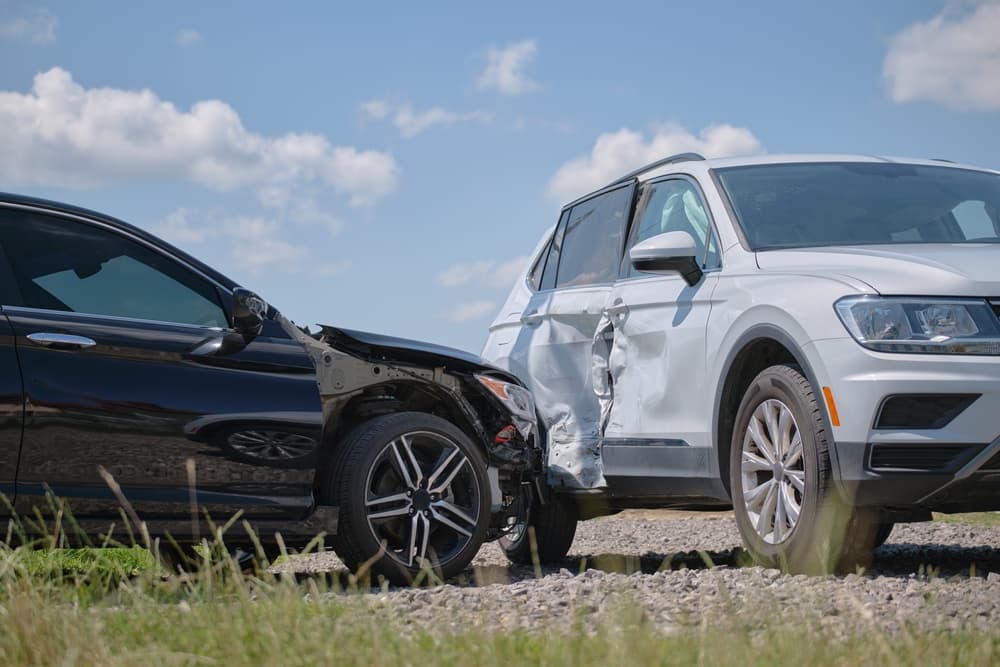
T-bone or side-impact collisions occur when a vehicle’s front end strikes another vehicle’s side, forming a “T” shape. These crashes happen primarily at intersections when drivers run red lights or stop signs, fail to yield right-of-way when turning, or misjudge gaps in traffic when crossing or turning.
The occupants of the struck vehicle suffer side-impact forces that a vehicle’s structure provides less protection against than those of frontal or rear impacts. Door intrusion, window glass breakage, and limited crush zone protection between impact and occupants create serious injury risks.
Causes
Common causes include running red lights or stop signs, failing to yield right-of-way when turning left across traffic, misjudging traffic speed or distance when entering intersections, distracted driving, preventing drivers from seeing traffic signals or other vehicles, and impaired driving, affecting judgment and reaction times.
Injuries
Typical injuries include:
- Head and brain injuries from side window or B-pillar impact
- Chest and abdominal injuries from door intrusion
- Pelvic and hip fractures from direct side impact
- Shoulder injuries from the struck side
Liability
Liability considerations depend on traffic control devices and right-of-way rules. Drivers entering intersections against red lights or stop signs bear clear fault. Left-turning drivers must yield to oncoming traffic and face liability when they turn into the flow of traffic.
However, in limited circumstances, a through driver may share some fault if a reasonably prudent driver could have avoided the crash, even with the right of way.
Evidence
Evidence includes traffic signal timing, witness confirmation of light colors, intersection camera footage when available, police crash reports documenting the status of traffic control devices, skid marks, and vehicle final positions showing travel paths, as well as witness statements about which vehicle entered the intersection first.
Head-On Collisions: The Most Dangerous Crash Type
Head-on collisions occur when vehicles traveling in opposite directions strike each other front-to-front. These crashes are relatively uncommon but produce the most severe injuries and highest fatality rates because impact forces combine both vehicles’ speeds.
Causes
Common causes include wrong-way driving on highways or one-way streets, crossing center lines due to distraction or drowsiness, impaired driving affecting lane control, unsafe passing attempts on two-lane roads, and hydroplaning or loss of control in adverse weather.
Injuries
Typical injuries include:
- Severe traumatic brain injuries
- Spinal cord injuries and paralysis
- Chest trauma and internal organ damage
- Multiple fractures throughout the body
- Wrongful death
Liability
Liability considerations generally rest entirely with the wrong-way or center-line-crossing driver. Drivers have clear duties to stay in proper lanes and avoid entering opposing traffic.
However, shared fault may arise if both drivers were speeding excessively, failed to take evasive action when the other driver’s encroachment was visible, or if road conditions contributed to loss of control.
Evidence
Evidence proving head-on collision circumstances includes police crash reports documenting final vehicle positions and travel directions, skid marks showing pre-impact paths, witness statements about which vehicle crossed into opposing lanes, and toxicology results if impairment is suspected.
Sideswipe Accidents: Same Direction and Opposite Direction
Sideswipe collisions occur when vehicles traveling parallel to each other make side-to-side contact. These can involve vehicles traveling in the same direction or opposite directions when vehicles drift too close on narrow roads or across center lines.
Causes
Same-direction sideswipes often result from lane change accidents when drivers fail to check their blind spots, merge without sufficient gaps, or drift out of lanes due to distraction. Highway sideswipes during lane changes can force struck vehicles into other lanes, barriers, or cause them to leave the roadway entirely.
Opposite-direction sideswipes occur on two-lane roads when vehicles drift across the center line, typically due to distraction, drowsiness, or overcorrecting from shoulder departures. Side-view mirror strikes and scraping damage characterize these lower-speed sideswipes, though they can cause loss of control, leading to more serious secondary impacts.
Injuries
Typical injuries include:
- Neck strain from lateral forces
- Shoulder injuries on the impact side
- Broken bones if vehicles are forced into barriers or other objects
Liability
Liability considerations focus on which driver initiated the unsafe movement. Lane-changing drivers bear the duty to ensure lanes are clear before merging.
Evidence
Evidence proving fault includes vehicle damage locations that show which vehicle crossed lane boundaries, turn signal use documentation, witness statements about sudden lane changes, and dashcam footage that shows pre-crash positioning.
Rollover Crashes: When Vehicles Overturn
Rollover crashes occur when vehicles tip onto their sides or roofs. SUVs, pickup trucks, and vans, which have higher centers of gravity, face a greater rollover risk than passenger cars.
Causes
Rollovers result from several mechanisms: tripping when tires strike curbs or road edges during loss of control, excessive speed on curves causing vehicles to tip outward, sudden steering overcorrections, and tire blowouts at highway speeds.
Injuries
Typical injuries in rollover crashes include:
- Head and brain trauma from occupants striking the roof or being ejected
- Spinal cord injuries from compression forces
- Fractures throughout the body from tumbling forces
- Lacerations from broken glass
- Death, particularly after an ejection
Liability
Liability considerations depend on what caused the rollover. Driver negligence, including excessive speed, distracted driving, or impaired operation, creates liability.
In some cases, separate claims against manufacturers or government entities may be available; an attorney can evaluate whether those issues exist.
Evidence
Evidence includes accident reconstruction analysis showing speed and steering inputs, tire examination for defects or improper inflation, vehicle inspection for mechanical defects, and witness statements about pre-rollover driving behavior.
Single-Vehicle Crashes: Fixed Object Collisions
Single-vehicle crashes involve one vehicle striking a fixed object, such as a tree, utility pole, barrier, building, or other stationary hazard. These accidents result from driver error, vehicle defects, or road conditions that cause loss of control.
Causes
Common causes include distracted driving leading to road departures, drowsy driving causing vehicles to drift off roadways, impaired driving affecting control and judgment, excessive speed reducing ability to navigate curves, tire blowouts or brake failures, and adverse weather creating loss of traction.
Injuries
Typical injuries vary, but may include:
- Head trauma
- Chest injuries
- Extremity fractures
Liability
Liability considerations in single-vehicle crashes often rest with the driver, but other parties may share fault. Vehicle manufacturers face liability when defects cause loss of control. Government entities may be liable when road design defects, missing barriers, or poor maintenance contribute to crashes. Property owners occasionally face premises liability when hazards on private property contribute to crashes.
Evidence
Evidence establishing liability against third parties may warrant expert accident reconstruction, thorough vehicle inspection for mechanical defects, and documentation of road conditions, including the presence of missing signs, inadequate lighting, or design defects.
Multi-Vehicle Crashes and Chain Reactions
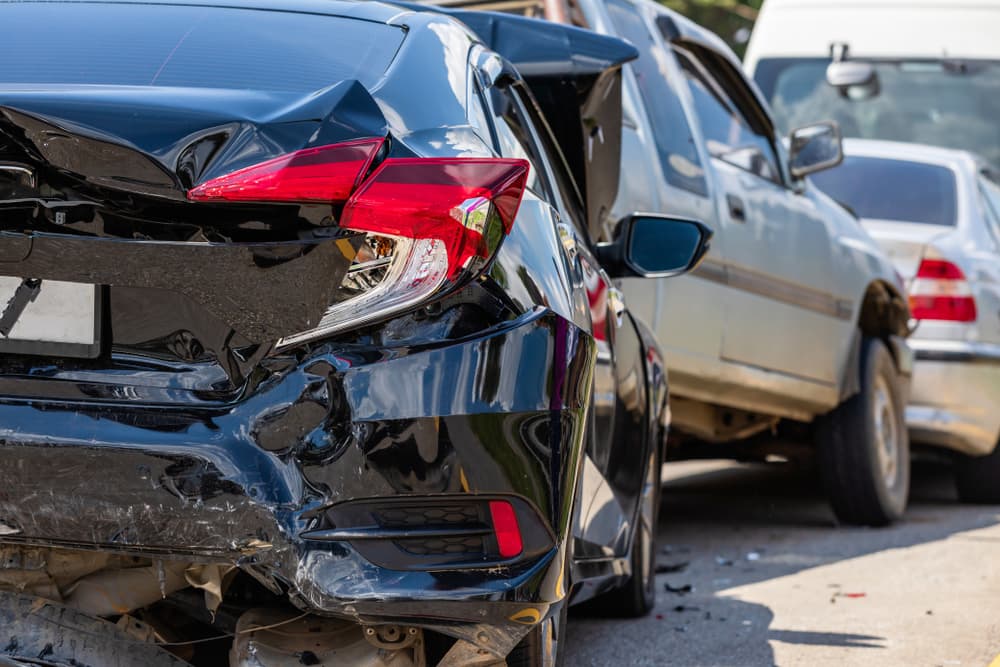
Multi-vehicle crashes involve three or more vehicles and typically occur on highways when initial collisions cause chain reactions. Heavy traffic, high speeds, and limited stopping distances create conditions where initial impacts trigger secondary collisions as following vehicles can’t stop in time.
Causes
Common causes include sudden traffic slowdowns on highways when following drivers don’t react quickly enough, fog or heavy rain reducing visibility and traction, distracted driving preventing early hazard recognition, and initial collisions blocking lanes and creating obstacles for approaching traffic.
Injuries
Typical injuries range widely depending on which collision sequence injured particular occupants. Lead vehicles in chain reactions may suffer less severe impacts than middle vehicles struck from multiple directions.
Liability
Liability considerations become complex in multi-vehicle crashes. The initial at-fault driver often bears primary liability for the entire chain reaction, but following drivers who fail to maintain safe distances or control speed for conditions may share fault. Texas’s modified comparative negligence allows recovery when fault stays below 51 percent, with damages reduced proportionally.
Evidence
Evidence proving liability in a multi-vehicle crash requires comprehensive accident reconstruction, witness statements from occupants of multiple vehicles, police crash reports documenting the collision sequence, and photographs showing the damage to and final positions of all vehicles.
How Crash Types Appear on Texas Police Reports
Texas peace officers complete standardized crash reports (Form CR-3) documenting collision circumstances. These reports include crash diagrams that show vehicle positions, travel directions, and impact points, using standardized symbols. Officers document collision types, contributing factors, and fault opinions.
Insurance companies review crash reports when evaluating claims. Officer fault determinations carry weight but don’t bind civil liability determinations. Courts recognize that officers arriving after crashes reconstruct events from physical evidence and statements, and their conclusions may be contradicted by additional evidence, like dashcam footage or witness testimony unavailable at the scene.
Branch & Dhillon, P.C.’s attorneys obtain crash reports immediately and analyze them for errors, inconsistencies, or missing information that affects liability determinations. When crash reports contain inaccuracies, we supplement them with an independent investigation to establish what actually occurred.
How Our Arlington Car Crash Lawyers Help With Your Claim
Our personal injury attorneys thoroughly investigate car accidents. We obtain crash reports, interview witnesses, secure surveillance footage, analyze vehicle damage, and collaborate with accident reconstruction experts as needed. Our experience handling rear-end collisions, T-bone crashes, head-on accidents, and complex multi-vehicle collisions provides insight into what evidence establishes liability and what strategies insurance companies use to avoid fair compensation.
When insurance companies dispute fault or offer inadequate settlements, we prepare cases for trial. Many claims settle favorably once defendants recognize we’ve gathered compelling evidence and aren’t intimidated by litigation.
We offer free consultations and work on a contingency basis, so you can have quality legal representation without worrying about the costs.
FAQ for Common Car Accident Types in Arlington
The rear driver typically bears fault for rear-end collisions because Texas law requires maintaining safe following distances and controlling speed to avoid striking vehicles ahead. However, front drivers may share fault if they stopped suddenly without reason, had non-functioning brake lights, or reversed unexpectedly, making individual crash circumstances important for determining proportional liability.
Fault in T-bone crashes depends on traffic control devices and right-of-way rules. Drivers running red lights or stop signs bear clear liability, and left-turning drivers must yield to oncoming traffic. Drivers proceeding through intersections on green lights generally have right-of-way, though they may share minor fault percentages if they could have avoided crashes despite having priority.
Head-on collisions combine both vehicles’ speeds into total impact forces. A 50 mph head-on crash involves a combined force of 100 mph. The tremendous energy transfer can overwhelm vehicle safety systems and human body tolerances, causing catastrophic trauma even with airbags and seatbelts.
Yes, Texas modified comparative negligence allows recovery when your fault stays below 51 percent, with damages reduced proportionally by your fault percentage. At 51 percent fault or higher, Texas law bars all recovery, making fault determinations critical to compensation.
With few exceptions, Texas imposes a two-year statute of limitations for personal injury claims. Missing this deadline usually bars you from pursuing compensation in court, regardless of liability clarity or injury severity. Early legal consultation protects your rights while evidence remains fresh and before deadlines become pressing concerns.
When drivers dispute fault, evidence becomes critical. Police crash reports, witness statements, photographs, dashcam footage, and vehicle damage patterns establish what actually occurred versus what drivers claim. An experienced lawyer can review the evidence, collaborate with experts when warranted, and build a solid case to prove fault.
Yes, Texas law makes many forms of distracted driving illegal. The state’s general distracted driving law prohibits using a handheld device to read, write, or send an electronic message while operating a moving motor vehicle.
Many Texas cities, including Arlington, have also passed their own ordinances that further restrict the use of cell phones while driving. Drivers who violate these laws and cause an accident face clear liability for any resulting injuries and damages.
Texas sets a separate statute of limitations for property damage claims in car accidents. Just like personal injury, you must file a claim for property damage, such as repair or replacement costs for your vehicle, within two years of the date of the accident. After two years, Texas law bars you from recovering compensation in court, making it crucial to act quickly to pursue both your injury and property damage claims.
From Crash Scene to Compensation: Next Steps
The type of collision that occurred provides the foundation for proving fault, but evidence transforms general liability principles into specific accountability.
At Branch & Dhillon, P.C., we represent car accident survivors throughout Arlington, Tarrant County, and the Dallas-Fort Worth area who need thorough investigation and aggressive advocacy. We gather evidence establishing crash type and fault, counter the insurance company’s attempts to shift blame, and build cases that hold negligent drivers accountable.
Contact us today to begin your claim process.