

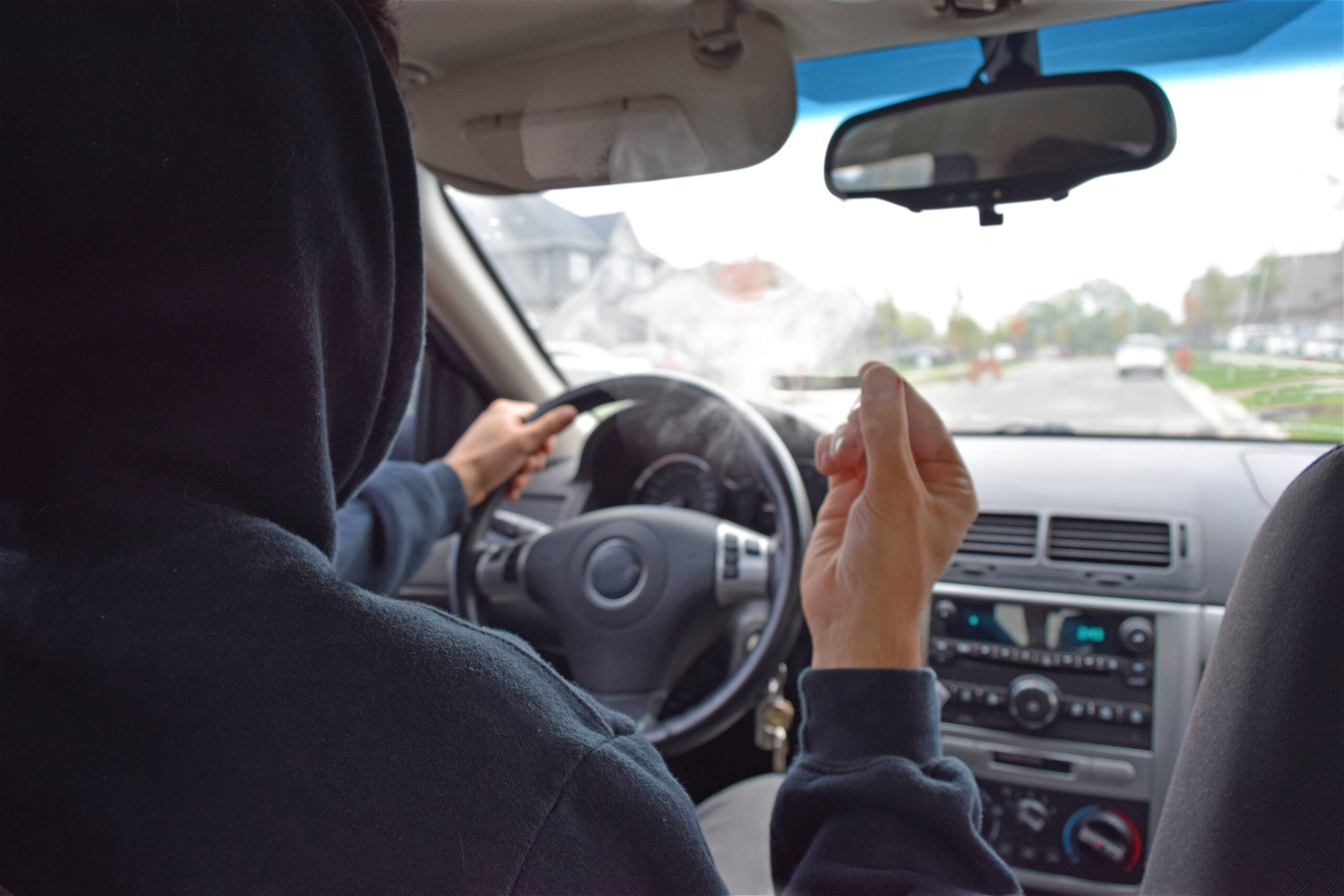
The data is clear. Studies confirm that drivers with THC in their system are roughly twice as likely to be involved in a crash as sober drivers. This is because marijuana impairs reaction time, coordination, and judgment—all skills vital for safe driving.
This impairment is especially concerning because many drivers who use cannabis feel fine and underestimate their inability to safely operate a vehicle.
Key Takeaways: Drug-Impaired Driving and Car Accidents
- Marijuana impairs the reaction time, judgment, and coordination that safe driving depends on, making crashes more likely.
- Driving high on drugs and causing a crash is illegal in Texas, and victims have the right to pursue compensation from the at-fault driver.
- Drug impairment is harder to prove than alcohol impairment, but evidence such as toxicology reports, witness statements, and police records can support a claim.
- Injuries from drug-impaired driving accidents can result in significant medical bills, lost income, and long-term physical harm.
- A car accident attorney can help you build a case, deal with insurance companies, and pursue the full compensation you may be entitled to.
Quick Answer: Can driving while high cause car accidents?
Yes, driving while stoned significantly increases the risk of a car accident. THC, the active compound in marijuana, slows reaction time, distorts perception, and impairs judgment, all of which are skills every driver needs to stay safe on the road.
- Marijuana affects the brain areas that control coordination, timing, and attention, making it harder to respond to sudden changes in traffic.
- Studies show that drivers with THC in their system are roughly twice as likely to be involved in a crash as sober drivers.
- Even when a driver feels only mildly impaired, their ability to judge speed, distance, and road hazards may already be compromised.
If a drug-impaired driver injured you, knowing that marijuana genuinely impairs driving may matter to your case.
Does Cannabis Impair Driving Ability?
Yes, cannabis-impaired driving is no longer just a research question; it has real consequences on real roads.
THC binds to receptors in the brain that regulate movement, coordination, and the ability to process information quickly. For a driver, that means slower reflexes, misjudged distances, and trouble staying in a lane.
Unlike alcohol, which tends to make drivers more aggressive, marijuana often makes drivers feel overly cautious. That sounds safer, but it isn’t.
For example, a driver under the influence of marijuana may drive far below the speed limit, stop unnecessarily at intersections, hesitate too long before merging into traffic, or wait too long to make turns at busy crossings.
That overly cautious behavior can disrupt the normal flow of traffic and create dangerous situations for surrounding drivers, cyclists, and pedestrians.
The Gap Between Feeling Fine and Being Safe
One of the most misleading things about marijuana impairment is how it feels to the impaired person. Many drivers who have used marijuana genuinely believe they are driving fine. Their perception of their own performance doesn’t match what is actually happening.
Studies using driving simulators have shown that cannabis users consistently underestimate how impaired they are, even when their reaction times and lane-keeping are measurably worse.
This matters to your case because the other driver may claim they felt perfectly capable of driving. Evidence from the scene, blood toxicology reports, and witness accounts can help tell a more accurate story.
When and Where Do Drug-Impaired Accidents Happen in Arlington?
Drug-impaired crashes don’t follow a predictable pattern, but certain conditions make them more likely. Late-night hours, weekend evenings, and high-traffic corridors tend to see a higher concentration of these incidents.
In Arlington, areas like the stretch of Division Street near the entertainment district, the busy lanes of Interstate 20, and the intersections around Six Flags Drive have all seen serious accidents involving impaired drivers.
Collisions can also happen in quieter areas. Residential neighborhoods near Pantego, the parking lots around AT&T Stadium on event nights, and surface roads running through south Arlington are not immune.
A driver impaired by cannabis may manage a freeway for a while, then lose focus entirely when navigating a stop-light intersection or a neighborhood turn.
What Injuries Do Victims Suffer in Drug-Impaired Crashes?
People usually suffer serious injuries from drug-impaired crashes. Since impaired drivers often react late, they typically hit other vehicles at or near full speed.
Rear-end collisions, T-bone crashes at intersections, and sideswipe accidents at highway speeds can produce injuries that affect victims for months or years.
Common injuries seen in these accidents include:
- Traumatic brain injuries, which range from concussions to more severe damage that affects memory, personality, and cognitive function
- Spinal cord injuries, which can cause partial or complete paralysis depending on the location and severity of the damage
- Broken bones in the arms, legs, ribs, or pelvis, often requiring surgery and extended physical therapy
- Soft tissue injuries to the neck and back, which may not show up on imaging immediately but cause lasting pain
- Internal organ damage, which can be life-threatening if not caught and treated quickly
Is Driving Under the Influence of Marijuana an Accident Risk in Texas?
Texas treats drug-impaired driving as seriously as drunk driving under the law. A driver does not have to be over a legal limit for marijuana the way they would for alcohol, because Texas has no established THC limit.
Instead, prosecutors and civil courts look at whether the driver was impaired to the degree that they lost normal use of their mental or physical faculties.
Legal Repercussions
A driver who caused your crash while under the influence of marijuana may face both criminal charges and civil liability. In a personal injury case, civil liability means you may be able to recover compensation for your medical expenses, lost wages, and pain and suffering from that driver.
What Proving Impairment Looks Like
Proving that a driver was high at the time of a crash takes more than a hunch. Texas law enforcement officers trained in drug recognition can conduct evaluations at the scene.
Blood tests drawn after an arrest may reveal the presence of THC, though THC can remain in the bloodstream long after impairment has passed, which is why other evidence matters too.
Useful evidence in these cases often includes:
- The police report and any notes from a Drug Recognition Expert evaluation
- Witness statements from people who observed the driver’s behavior before or after the crash
- Dashcam footage from your vehicle or nearby traffic cameras
- Social media posts the driver may have made shortly before the crash
- Statements the driver made to officers at the scene
How Does Driving High on Drugs and Causing a Crash Affect a Personal Injury Claim?
Driving high on drugs and causing a crash can strengthen a personal injury claim in ways that a standard negligence case may not. When a driver was impaired by drugs at the time of a crash, their conduct goes beyond simple carelessness.
Texas law allows courts to consider punitive damages in cases involving gross negligence, and drug-impaired driving may qualify. Punitive damages are different from compensatory damages. Compensatory damages cover your actual losses, such as medical bills, lost income, and the cost of future care.
Punitive damages are meant to punish the at-fault driver and discourage similar behavior. Not every case qualifies, but when a driver made a deliberate choice to get behind the wheel while impaired, that decision may weigh heavily in your favor.
What Other Compensation May Be Available?
Compensation in a drug-impaired driving case may cover a wide range of losses. Medical expenses are usually the most immediate concern, and those can include emergency room visits, surgery, rehabilitation, and ongoing therapy. Lost wages matter too, especially if your injuries kept you out of work for weeks or months.
Beyond the financial losses, living with the physical pain, emotional strain, and daily limitations that a serious crash causes carries its own weight. Texas law allows injured people to seek compensation for pain and suffering, mental anguish, and loss of enjoyment of life. An attorney can help you identify every category of loss that applies to your situation.
What Steps May Help You Protect Your Claim?
After a crash caused by a drug-impaired driver, the decisions you make in the days and weeks that follow can affect the strength of your claim. A few practical steps may help:
Seek Medical Attention Right Away
Consider seeking medical attention immediately, even if you feel relatively okay after the crash. Some injuries, particularly internal ones and those involving the brain or spine, may not produce obvious symptoms right away. Getting evaluated creates a medical record that ties your injuries to the accident.
Preserve Evidence From the Scene
Preserving evidence matters early on. Photographs of the crash scene, your vehicle, and your visible injuries taken as soon as possible can be valuable later. If witnesses were present, gathering their contact information may help your attorney track them down.
Keep a Record of How Your Injuries Affect Your Life
Keeping a written record of how your injuries affect your daily life may also support your claim. Noting when you couldn’t sleep, when you missed a family event, or when pain kept you from doing your job provides human context that medical records alone can’t capture.
Talk to an Attorney Before Speaking with Insurance
Talking to a car accident attorney before speaking with the other driver’s insurance company is worth considering. Insurance adjusters may contact you early and may ask questions designed to limit what you can recover. An attorney can handle those conversations on your behalf.

Frequently Asked Questions About Drug-Impaired Accident Claims in TX
How long do I have to file a car accident claim in Texas?
Texas gives most car accident victims two years from the date of the crash to file a personal injury lawsuit, under the state’s statute of limitations. Missing that deadline typically means losing the right to pursue compensation in court, so reaching out to an attorney sooner rather than later helps protect your options.
Can a driver be held liable if they weren’t arrested for drug impairment?
Yes. Criminal charges and civil liability are separate legal matters. A driver can be civilly responsible for your injuries even if they were never charged with or convicted of a crime. The standard of proof in a civil case is lower than in a criminal one, and your attorney can gather evidence independently of what law enforcement collected.
What if the at-fault driver’s insurance company says marijuana impairment can’t be proven?
Insurance companies may raise this argument to reduce or deny your claim. A skilled attorney knows how to respond and can work with accident reconstruction experts, toxicologists, and other professionals whose testimony can establish impairment even without a clear-cut lab result.
What if I was partly at fault for the crash?
Texas follows a modified comparative fault rule. If you were partially responsible for the accident, your compensation is reduced by your percentage of fault. As long as you were not more than 50 percent at fault, you may still recover damages. An attorney can assess how fault is likely to be divided in your case.
How much does it cost to hire a car accident attorney?
Most car accident attorneys, including our firm, work on a contingency fee basis. That means you pay no upfront fees and no hourly charges. The attorney’s fee comes as a percentage of the compensation you recover, so there’s no cost to you unless your case results in a settlement or verdict in your favor.
Injured in an Arlington Crash? Branch and Dhillon, P.C. Is Ready to Help
If someone was driving high on drugs and caused a crash that put you or someone you love in the hospital or left you unable to work, you deserve straightforward answers and knowledgeable legal support.
At Branch and Dhillon, P.C., our experienced and focused legal team has helped injured people in Arlington and across the Dallas-Fort Worth area pursue the compensation they need to move forward.
We understand the physical pain, the financial pressure, and the emotional weight that follows a serious crash. We’re here to carry the legal burden so you can focus on your recovery. Our team will review your case, explain your rights, and give you an honest assessment of your options, all at no cost to you.
Call Branch and Dhillon, P.C. today at +1-817-533-3430 to schedule your free consultation. You don’t have to face this alone, and you shouldn’t have to.