


After a collision with a large commercial truck, it’s common to replay the moments leading up to the crash in your mind and wonder if you could have done something differently. If you believe you might be partly to blame for the trucking accident, you may worry that you have no way to seek compensation for your injuries and losses. Speaking with a truck accident lawyer can help you understand your options. The good news is that in Texas, sharing a small portion of the fault does not automatically prevent you from recovering damages. The law recognizes that a crash is often a complex event with multiple contributing factors.
Key Takeaways about What if You’re Partly to Blame for a Trucking Accident
- Texas law follows a “proportionate responsibility” system, which allows an injured person to recover damages even if they are partially at fault.
- An individual is barred from recovering compensation only if their percentage of fault is determined to be 51% or greater.
- The amount of compensation an injured party can receive is reduced by their percentage of fault.
- Determining fault in a truck accident involves a detailed investigation into evidence like police reports, witness testimony, and data from the truck’s electronic recorder.
- Trucking companies and their insurance carriers often attempt to shift as much blame as possible onto the other driver to reduce their financial liability.
- Speaking with an attorney is critical for understanding how shared fault rules might apply to a specific case and for building a strong claim.
Understanding Texas’s Shared Fault Rule: Proportionate Responsibility
When a personal injury case goes to court in Texas, the jury is asked to assign a percentage of fault to everyone involved in the incident. This legal doctrine is called proportionate responsibility. Essentially, it’s a system for dividing the blame.
So, what does this mean for you?
It means that even if you made a mistake that contributed to the accident, you could still be eligible to receive financial compensation from the other at-fault parties, such as the truck driver or their employer. The key is the percentage of fault assigned to you.
Texas uses what is known as a “51% bar rule.” This rule states that you can recover damages as long as your percentage of responsibility is 50% or less. If a court finds that you were 51% or more responsible for the collision, you are barred from recovering any compensation at all.
However, if your fault is 50% or less, your final compensation award will be reduced by your percentage of fault. For example, if you sustained $100,000 in damages but were found to be 10% at fault, your damages would be reduced by 10% ($10,000), leaving you with a recovery of $90,000.
This system ensures that financial responsibility is divided fairly based on each party’s contribution to the incident.
How is Fault Determined in a Texas Truck Accident?
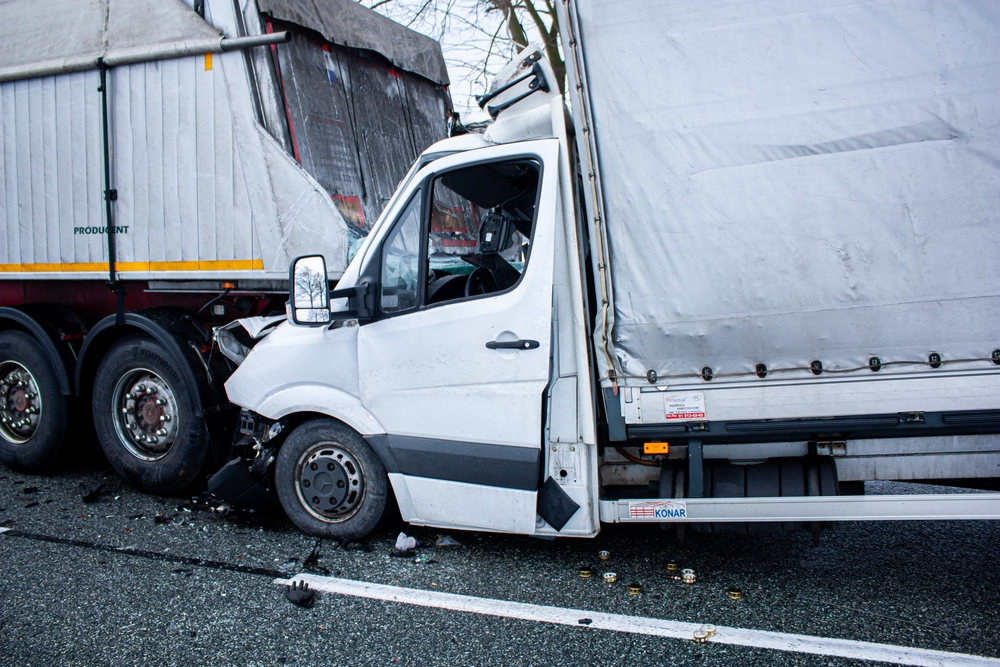
Determining who is at fault in a truck crash is far more complicated than in a typical car accident. Trucking companies and their insurance providers have rapid response teams that begin investigating immediately. Their goal is often to find evidence that shifts blame away from the truck driver and onto you.
A thorough investigation is needed to establish the true sequence of events. Several key pieces of evidence are used to assign percentages of fault:
- The Official Police Report: While not the final word, the responding officer’s report provides an initial assessment of the scene and may include citations or opinions on contributing factors.
- Witness Statements: Eyewitnesses can provide crucial, impartial accounts of what they saw. Their testimony can help confirm or challenge the narratives of the drivers involved.
- Truck’s Electronic Data Recorder (EDR): Often called a “black box,” this device records critical data about the truck’s operation, such as speed, braking, steering inputs, and hours of service. This data can prove a driver was speeding, fatigued, or failed to brake in time.
- Driver Logs and Records: Federal regulations require truck drivers to maintain detailed logs of their driving hours to prevent fatigue. An attorney can examine these logs, along with the driver’s employment history and training records, for signs of negligence.
- Accident Reconstruction Analysis: In complex cases, specialists can be hired to reconstruct the crash scene. They use physics, vehicle dynamics, and physical evidence to create a scientific model of how the collision occurred.
This evidence helps paint a full picture of the accident, which is vital for accurately assigning responsibility under Texas law.
Why You Shouldn’t Admit Fault After a Collision
In the stressful moments following a crash, it’s human nature to want to be polite or even apologize. You might say something like, “I’m so sorry, I didn’t see you.” While this seems harmless, it can be interpreted as an admission of guilt by an insurance company.
It is crucial to remember a few things when you are at home recovering after an accident:
- Your perception may be inaccurate. Injuries, shock, and adrenaline can cloud your memory of the event. You may not be aware of all the factors that contributed to the crash, such as the truck driver being distracted or a mechanical failure on the rig.
- “Fault” is a legal conclusion. What you feel is your fault and what constitutes legal negligence can be two very different things. Negligence is a legal term for failing to use reasonable care to prevent harm to others. Determining this requires a full investigation.
- Insurance adjusters are not on your side. The insurance adjuster for the trucking company may call you and ask for a recorded statement. Their job is to minimize the amount their company has to pay. They are trained to ask questions that can get you to say something that implies you were at fault.
It is always best to stick to the facts when speaking to law enforcement and to avoid discussing fault with anyone else, especially the other driver or their insurance representatives. Before providing any formal statement, consulting with a personal injury attorney can help you protect your rights.
Common Ways Car Drivers Are Unfairly Blamed in a Truck Crash
Trucking companies and their legal teams have a great deal of experience in defending against accident claims. They often try to place a portion of the blame—or all of it—on the driver of the passenger vehicle. This is a strategic move to reduce or eliminate the amount of money they have to pay under the proportionate responsibility rule.
Some common arguments they use to shift fault include claiming the car driver was:
- Driving in the truck’s “no-zone” or blind spots. Commercial trucks have significant blind spots, but experienced truck drivers are trained to be aware of them.
- Changing lanes abruptly. They might argue you cut the truck off, leaving the driver no time to react, even if the driver was following too closely or was not paying attention.
- Braking suddenly. A fully loaded semi-truck requires a much longer stopping distance than a car. They may blame you for “brake checking” the truck.
- Being distracted. They will look for any indication that you were using your phone, adjusting the radio, or were otherwise not fully focused on the road.
An experienced truck accident attorney understands these tactics and knows how to counter them with strong evidence. The goal is to present the full context of the accident, not just the pieces that benefit the trucking company.
The Role of an Attorney in Proving Fault

When you are trying to recover from serious injuries after a crash on a busy road like I-30 in Arlington, the last thing you need is a fight with a large corporation. A skilled personal injury attorney can handle the legal burdens for you. Their role is to conduct an independent investigation focused solely on protecting your interests.
This investigation often goes much deeper than the one performed by the insurance company. An attorney will work to:
- Preserve Critical Evidence: The first step is often sending a spoliation letter to the trucking company. This is a legal notice demanding they preserve all relevant evidence, including the truck’s black box data, driver logs, and maintenance records, before it can be altered or destroyed.
- Uncover Violations of Federal Regulations: The trucking industry is heavily regulated by the Federal Motor Carrier Safety Administration (FMCSA). These regulations cover everything from how many hours a driver can be on the road to required vehicle maintenance schedules. A violation of these rules can be powerful evidence of negligence.
- Hire the Right Experts: A law firm can bring in industry professionals, such as accident reconstructionists and mechanical engineers, to analyze the evidence and provide expert testimony on your behalf.
- Negotiate with the Insurance Company: Armed with strong evidence, an attorney can effectively demonstrate the true extent of the trucking company’s fault and negotiate for a fair settlement that accounts for all of your damages.
By building a comprehensive case, an attorney can challenge attempts to unfairly shift blame and work to hold the responsible parties accountable for their actions.
Calculating Your Compensation with Shared Fault
As mentioned earlier, Texas’s proportionate responsibility rule directly impacts the amount of compensation you can receive. The process starts by calculating the total value of your damages—all the losses you have suffered because of the accident.
Your potential compensation may cover a wide range of losses, including:
- Medical Expenses: This includes everything from the initial emergency room visit and hospital stay to future surgeries, physical therapy, and medication.
- Lost Income: Compensation for the wages you lost while unable to work, as well as any reduction in your future earning capacity if your injuries are permanent.
- Pain and Suffering: This compensates you for the physical pain, emotional distress, and loss of enjoyment of life resulting from the accident.
- Property Damage: The cost to repair or replace your vehicle.
Once your total damages are calculated, that amount is reduced by whatever percentage of fault is assigned to you. This rule underscores why it is so important to fight against any unfair allocation of fault. Even a small percentage of blame can significantly reduce the financial resources you have available for your recovery.
Shared Fault in a Truck Accident FAQs
Here are answers to some common questions about shared fault in Texas truck accident cases.
A police report is an important piece of evidence, but it is not the final determination of legal fault. The officer’s opinion is based on the limited information available at the scene. A thorough legal investigation may uncover evidence that contradicts the report, such as data from the truck’s black box showing the driver was speeding or in violation of federal safety rules.
driver was speeding or in violation of federal safety rules.
Can I still have my medical bills paid if I’m partially at fault?
You are responsible for your medical bills as you incur them. A personal injury claim seeks reimbursement for those bills from the at-fault party’s insurance. If you are found partially at fault, the compensation you receive to cover those bills will be reduced by your percentage of fault. An attorney can sometimes help you manage medical bills while your case is pending.
In Texas, the statute of limitations for most personal injury cases, including truck accidents, is two years from the date of the incident. This means you must file a lawsuit within that time frame, or you will likely lose your right to seek compensation. It is important to act quickly to ensure evidence is preserved and deadlines are met.
This is a classic example of shared fault. The truck driver’s intoxication is a severe form of negligence, and they would likely bear the majority of the fault. However, if your speeding contributed to the crash or the severity of your injuries, a jury could assign you a small percentage of responsibility, which would slightly reduce your final compensation.
Yes, the principles of proportionate responsibility also apply in wrongful death cases. The percentage of fault assigned to the deceased person would reduce the amount of compensation their surviving family members could recover. However, if the deceased person is found to be 51% or more at fault, the family would be barred from any recovery.
Let Us Handle the Legal Details While You Focus on Healing

If you’ve been injured in a truck accident and are worried that you might share some of the blame, it’s important not to make any assumptions about your case. The laws surrounding proportionate responsibility in Texas are complex, and the actions of a trucking company’s insurance carrier can easily jeopardize your right to fair compensation. You need a dedicated advocate on your side.
At Branch & Dhillon, P.C., our practice is focused on helping people who have been hurt in serious accidents. We understand the challenges you are facing and are committed to holding negligent parties accountable. We will conduct a comprehensive investigation into your accident to build the strongest possible case and protect you from unfair blame.
Contact our Arlington, Texas, office today at (817) 533-3430 or through our online form for a free, no-obligation consultation. We take all cases on a contingency basis, which means you pay no fees unless we successfully recover compensation for you. Let us put our skills to work so you can concentrate on what matters most: your recovery.