

A refreshing dip in a swimming pool is a classic Texas solution to a sweltering summer day. From backyard gatherings in Arlington to community pools across Tarrant County, pools are centers of fun and relaxation. Unfortunately, this idyllic scene can change in an instant when safety is overlooked.
Many swimming pool accidents are not just tragic mishaps; they are often the result of preventable hazards and negligence, leading to severe injuries or worse. If you or a loved one was injured in a swimming pool accident due to someone else’s negligence, speak with a swimming pool accident attorney about your legal options.
Key Takeaways about Common Causes of Swimming Pool Accidents
- A leading cause of swimming pool accidents, especially involving young children, is the absence of adequate fencing and functional, self-latching gates.
- Negligent or distracted supervision is a major contributing factor in drowning and near-drowning incidents, which can occur silently and within seconds.
- Property owners in Texas have a legal responsibility, known as premises liability, to maintain a reasonably safe environment for visitors around their pools.
- Hazards extend beyond the water itself and include slippery surfaces, broken pool decks, and poorly maintained equipment like drains and filters.
- Victims of a swimming pool accident may be entitled to compensation for medical expenses, pain and suffering, and other damages caused by a property owner’s carelessness.
The Hidden Dangers: Unpacking the Common Causes of Swimming Pool Accidents

While a swimming pool seems straightforward, it’s a complex environment with numerous potential points of failure. When property owners fail to address these risks, they create a dangerous situation for guests, friends, and even uninvited children who may wander onto the property. These failures often fall into a few key categories.
Lack of Adequate Fencing and Barriers
One of the most critical safety layers for any pool is a proper barrier. A simple fence can be the difference between a close call and a catastrophe, particularly for families with young children. In Texas, specific laws are in place to prevent accidental drowning.
The Texas Health and Safety Code, Chapter 757, also known as the Pool Yard Enclosure Act, outlines standards for pool enclosures to protect children. These standards often include:
- Minimum Height: The fence must be a certain height (typically at least 48 inches) to prevent a small child from easily climbing over it.
- Self-Closing and Self-Latching Gates: Gates should close and latch automatically. The latch should be high enough to be out of a young child’s reach.
- Limited Gaps: There should be no large gaps under the fence or between slats that a child could squeeze through.
When a homeowner or property manager in a place like Fort Worth or Arlington fails to install or maintain these required barriers, they are creating an accessible and extreme hazard. A broken latch or a propped-open gate completely defeats the purpose of the fence, leaving a direct path to danger.
Inadequate Supervision
Drowning is not like what we see in the movies. It is often a silent and incredibly fast event. A person, especially a child, can slip under the water without a splash or a cry for help. This is why constant, attentive supervision is absolutely essential whenever people are in or around a pool.
Negligent supervision can happen in several ways. At a private residence, it might be a host who is distracted by grilling, talking on the phone, or mingling with other guests. At a public or community pool, it could be a lifeguard who is not properly trained, is not paying attention, or is overwhelmed by a large, chaotic crowd.
Here are some key elements of active supervision:
- Designated “Water Watcher”: Appoint one sober, responsible adult whose only job for a set period (e.g., 15-20 minutes) is to watch the water without any distractions.
- Avoiding Distractions: The designated watcher should put away their phone, books, and other tasks to focus solely on the swimmers.
- Proximity: For young children and inexperienced swimmers, an adult should always be within arm’s reach.
Simply being in the same area is not enough. True supervision requires dedicated attention, and a lapse of just a few seconds can have devastating consequences.
Unsafe Pool Decks and Equipment: More Than Just Water Dangers

Swimming pool accidents are not confined to the water. The surrounding area and the pool’s mechanical systems can also pose a significant threat if not properly maintained. The responsibility for these elements falls squarely on the property owner.
Slippery Surfaces and Trip Hazards
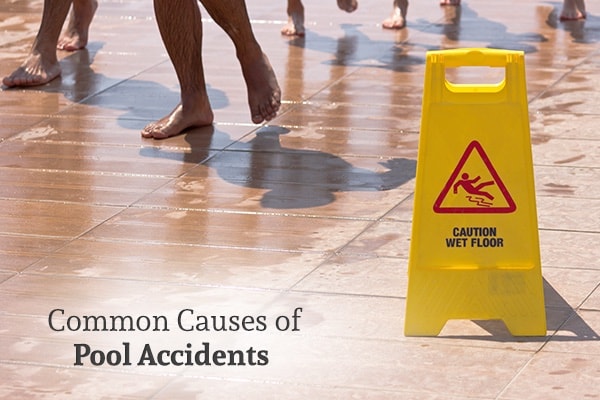
Water is constantly splashed out of pools, making the surrounding deck, tile, or concrete surfaces extremely slippery. While some wetness is unavoidable, property owners have a duty to minimize the risk of a slip and fall accident. This can be done by using non-slip surfaces, ensuring proper drainage, and promptly cleaning up slick spots from spilled drinks or sunscreen.
Beyond slipperiness, other hazards can litter the pool deck:
- Cracked or Uneven Concrete: A shifting foundation or neglected maintenance can create trip hazards that can cause broken bones, sprains, or even head injuries.
- Clutter: Pool toys, cleaning equipment, chairs, and other items left carelessly on the deck can create an obstacle course for anyone walking by.
- Poor Lighting: For pools used in the evening, inadequate lighting can hide these hazards, making a dangerous fall much more likely.
These conditions can easily lead to a serious injury. A fall on a hard surface can be just as damaging as an incident in the water.
Malfunctioning Drains and Filters
The powerful suction from a pool’s drain and filtration system is a hidden but severe danger. If a drain cover is broken, missing, or not compliant with federal safety standards, a person can become trapped by the suction. This is known as suction entrapment and can lead to catastrophic internal injuries or drowning.
The Virginia Graeme Baker Pool and Spa Safety Act is a federal law that requires public pools to have specific types of anti-entrapment drain covers and other safety systems. While it applies to public facilities, the safety principles are crucial for residential pools as well. A homeowner who fails to maintain their drains or replaces a cover with a non-compliant one is neglecting a critical safety duty. When this type of maintenance is ignored, the results can be life-altering.
Understanding Legal Responsibility for a Swimming Pool Accident in Texas
When an injury occurs at a swimming pool, the legal concept that often applies is “premises liability.” In simple terms, this means that property owners have a legal obligation—a “duty of care”—to keep their property reasonably safe for visitors. When they fail in this duty and someone gets hurt as a result, the property owner can be held legally and financially responsible.
The level of duty a property owner owes depends on the status of the visitor. In Texas, visitors are generally classified in one of three ways:
- Invitee: This is someone invited onto the property for the owner’s benefit, such as a customer at a public pool or a guest at a paid pool party. The owner owes the highest duty of care to an invitee, which includes actively inspecting for, warning about, and fixing known dangers.
- Licensee: This is a social guest, like a friend or family member invited to a backyard barbecue. The owner has a duty to warn a licensee of known dangers but is not required to actively inspect for unknown ones.
- Trespasser: This is someone on the property without permission. Generally, an owner owes no duty to a trespasser, except not to intentionally injure them.
However, there is a major exception for child trespassers known as the “attractive nuisance” doctrine. A swimming pool is a classic example of an attractive nuisance because it can naturally draw the curiosity of a child who is too young to understand the danger. Because of this, property owners have a higher duty to protect children from these dangers, even if they are trespassing. This is why pool fencing laws are so important.
For a premises liability claim to be successful, several elements typically must be established:
- There was a dangerous condition on the property (e.g., a broken gate, a slippery deck, an unsafe drain).
- The property owner knew or reasonably should have known about the dangerous condition.
- The owner failed to take reasonable steps to repair the condition or warn visitors about it.
- The owner’s failure was the direct cause of the visitor’s injuries.
Proving these elements requires careful investigation and a clear understanding of Texas law.
What to Do After a Swimming Pool Accident
After a swimming pool accident, the priority is always to get immediate medical help. Once the initial emergency has passed and you are home, the steps you take next can be crucial for protecting your health and your legal rights.
Continue All Medical Treatment
Your health is the top priority. Follow up with your primary care doctor and any specialists you are referred to. Attend all physical therapy sessions and appointments. This not only aids your recovery but also creates an official record of your injuries and the treatment required, which is vital for any future legal claim.
Document Everything You Can
Memories fade, and details become blurry over time. It is essential to document as much as possible while the incident is still fresh in your mind.
- Photos and Videos: If it is safe to do so, have someone take pictures or videos of the accident scene. Capture the specific hazard that caused the injury—the broken fence latch, the cracked concrete, the murky water, or the missing drain cover.
- Witness Information: Get the names and phone numbers of anyone who saw what happened. Their accounts can be invaluable.
- Write It Down: Create a detailed, written account of the accident. Include the date, time, location, what you were doing, how the accident occurred, and who was present.
- Keep a Recovery Journal: Track your daily pain levels, medical appointments, limitations on your daily activities, and the emotional impact the injury is having on your life.
- Organize All Paperwork: Keep a file for all medical bills, receipts for prescriptions, explanation of benefits (EOB) forms from your insurer, and any correspondence from the property owner or their insurance company.
Following these documentation steps can provide a clear and detailed picture of the accident and its impact on your life.
Be Cautious with Insurance Companies
The property owner’s insurance adjuster may contact you very soon after the accident. They may seem friendly and concerned, but it is important to remember that their job is to protect their company’s financial interests by minimizing or denying your claim. Avoid giving a recorded statement or signing any documents until you have had the opportunity to consult with an attorney.
FAQs: Common Causes of Swimming Pool Accidents
Here are some answers to common questions people have after being involved in a swimming pool accident.
Responsibility for an accident at an apartment or community pool typically falls on the property owner or the property management company. They are responsible for ensuring the pool and its surrounding areas comply with all state and local safety codes, including proper fencing, functional gates, and regular maintenance.
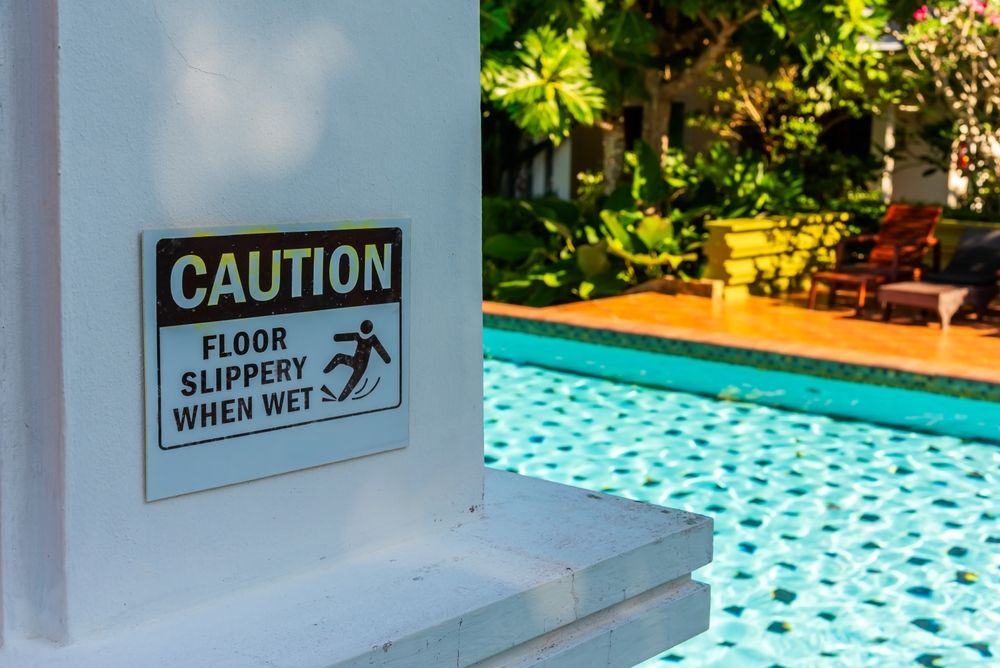
Possibly. While these signs can sometimes be used as a defense, they do not automatically protect a property owner from liability for negligence. A sign does not give an owner a free pass to ignore dangerous conditions. If the owner was negligent in maintaining the property—for example, by having a broken drain cover or failing to fix a known trip hazard—they may still be held responsible for resulting injuries.
In Texas, the statute of limitations for most personal injury claims is two years from the date the injury occurred. This is a strict deadline, and if you miss it, you will likely lose your right to seek compensation. It is important to speak with an attorney well before this deadline to understand your options.
Contact a Compassionate Arlington Personal Injury Attorney

At Branch & Dhillon, P.C., our dedicated attorneys focus on personal injury law, allowing us to provide knowledgeable and passionate representation for every client. We understand the physical, emotional, and financial toll an accident takes on a family.
Our goal is to handle the legal complexities of your case so you can concentrate on what matters most—your recovery. We aggressively advocate for our clients’ rights and work to hold negligent parties accountable. Because our personal injury attorneys work on a contingency fee basis, you won’t pay any out-of-pocket costs unless we successfully recover compensation for you. If you or a loved one has been injured in a swimming pool accident in Arlington or anywhere in Tarrant County, contact Branch & Dhillon, P.C. today at (817) 533-3430 or through our online form for a free, no-obligation consultation. Let us listen to your story and explain how we can help.