

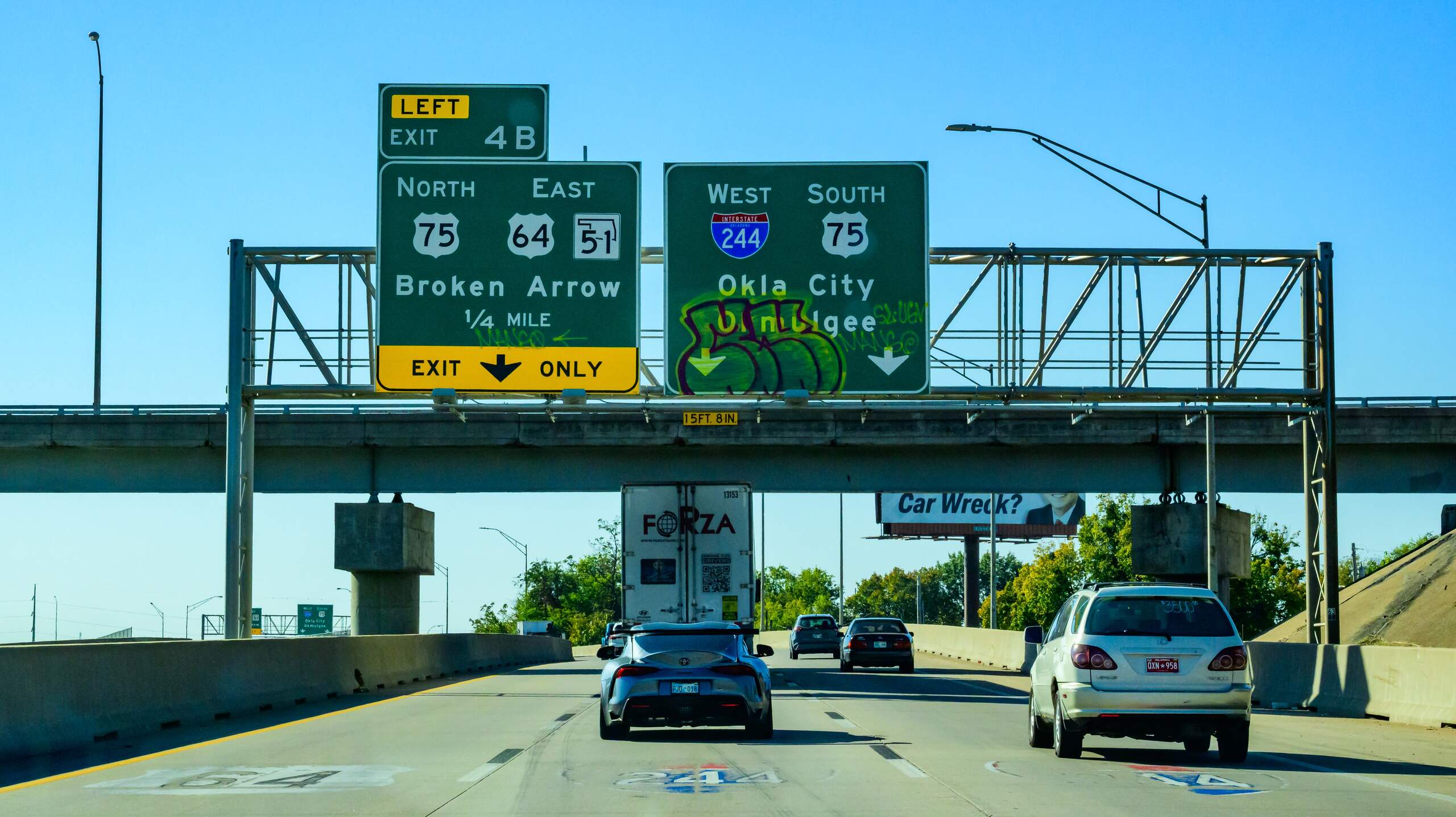
Ask any Oklahoma City police officer where the worst wrecks happen, and a handful of the same interchanges come up again and again. Oklahoma City car accident hotspots tend to cluster around a few predictable trouble spots, mainly where major highways merge, traffic moves fast, and distraction or impairment turns a routine drive into a crash scene.
If someone else caused your crash at one of these known trouble spots, or anywhere else in the metro, you’re probably dealing with more than a damaged bumper. An Oklahoma City car accident attorney can look at exactly what happened at the intersection or roadway in question and tell you plainly what your options look like, at no cost to you.
Key Takeaways: Accident Hot Spots in Oklahoma City
- A small number of interchanges and corridors account for a disproportionate share of Oklahoma City’s serious crashes.
- Distracted driving and impaired driving remain two of the leading contributing factors identified by traffic safety officials in the metro.
- High-speed merge points, like where Lake Hefner Parkway meets I-44 and the Kilpatrick Turnpike, create some of the riskiest driving conditions in the city.
- Crash patterns shift as construction, traffic volume, and road design change, so current data always matters more than older reporting.
- Knowing which roads carry higher risk doesn’t prevent every crash, but it can inform how carefully you approach certain stretches of your daily commute.
Where Car Accidents Happen in Oklahoma City Most Often?
Where car accidents happen in Oklahoma City most often comes down to a short list of interchanges and corridors where high traffic volume, merging patterns, and speed combine into consistently dangerous conditions. Local news reporting analyzing crash data has repeatedly pointed to the same handful of locations year after year.
Why Does the Lake Hefner Parkway Area Rank So High?
The Lake Hefner Parkway area near the Kilpatrick Turnpike ranks among the most dangerous stretches in the city largely because of its combination of high speed limits, frequent lane changes, and heavy merge traffic. Reporting on Oklahoma City crash data has identified this corridor as consistently generating more serious crashes than almost any other area in the metro.
The Lake Hefner Parkway and I-44 interchange follows closely behind, driven by similar factors, drivers moving at highway speed while trying to navigate multiple merge points in a short distance. These interchanges force drivers to make quick decisions, and a moment of distraction at the wrong second can turn into a serious collision.
This stretch also sees a noticeable spike in crashes during weather events, since Oklahoma’s sudden shifts between clear skies and heavy rain or ice catch drivers off guard on a roadway already known for its high speeds and tight merge windows.
A driver who’s used to dry pavement on a normal commute often doesn’t adjust following distance quickly enough once conditions change, and that gap in reaction time shows up disproportionately in crash data from this corridor.
What Makes the I-235 and I-44 Interchange So Dangerous?
The I-235 and I-44 interchange creates elevated crash risk because it combines two major highways with heavy commuter traffic, resulting in frequent merging conflicts during peak hours.
This area regularly appears among the Oklahoma City high-risk roads for car accidents identified by local traffic data.
What Role Does Traffic Volume Play at This Interchange?
Traffic volume plays a significant role at this interchange, since the sheer number of vehicles attempting to merge or exit within a short stretch increases the odds of a driver misjudging a gap or reacting too late to a slowdown.
Rush hour traffic compounds this risk considerably, particularly during evening commutes when fatigue and impatience factor into driver behavior.
Construction activity around this interchange over the years has added another layer of risk, since temporary lane shifts and reduced shoulder space give drivers even less room for error than the interchange’s permanent design already allows.
Even drivers who travel this stretch daily sometimes struggle to adjust quickly when a familiar merge pattern suddenly changes due to active roadwork.
Why Are Areas Near the Airport a Concern?
Areas near the airport, particularly along Meridian Avenue, show elevated crash rates due to a mix of commercial vehicle traffic, hotel and rental car shuttle activity, and commuters moving quickly between the airport corridor and surrounding business districts.
This combination of vehicle types moving at different speeds and with different priorities creates friction that regular commuter corridors don’t experience in the same way.
What Contributing Factors Show Up Most in Oklahoma City Crash Data?
Distracted driving and impaired driving show up most consistently in Oklahoma City crash data, with national safety officials noting Oklahoma ranks among the higher states for both alcohol-related and distraction-related fatal crashes.
These two factors cut across nearly every dangerous corridor in the metro, regardless of the specific intersection involved.
How Big a Factor Is Distracted Driving?
Distracted driving remains one of the largest contributing factors in Oklahoma City crashes, with national safety data attributing roughly a quarter of all crashes nationwide to cell phone use or similar distractions behind the wheel.
Local traffic officials have specifically pointed to this issue as a growing concern compared to prior decades, given how much technology now competes for a driver’s attention during even a short commute.
Does Impaired Driving Contribute as Heavily?
Impaired driving contributes heavily alongside distraction and speeding. Traffic safety officials describe these three factors together as a significant combination behind serious crashes in the Oklahoma City area.
Lower fuel prices historically correlate with more miles driven overall, which in turn increases total crash exposure across the metro.
What Are the Most Dangerous Intersections in Oklahoma City?
The most dangerous intersections in Oklahoma City tend to cluster around highway interchanges rather than standard surface street intersections, since higher speeds and complex merge patterns create more opportunities for serious collisions.
This doesn’t mean surface street intersections are risk free, but the severity of crashes tends to run higher at these interchange points.
Why Do Interchanges Carry More Risk Than Regular Intersections?
Interchanges carry more risk than regular intersections because vehicles are traveling at highway speeds while simultaneously making lane changes, merging, or exiting, all within a compressed span of roadway.
A regular stoplight intersection typically involves lower speeds, which tends to reduce the severity of any resulting collision even when a crash does occur.
Do Surface Street Intersections Still Pose Real Risk?
Surface street intersections still pose real risk, particularly ones with heavy left turn traffic, poor visibility, or a history of drivers running red lights during rush hour. While these crashes tend to happen at lower speeds than highway interchange collisions, T-bone impacts at busy surface intersections can still cause serious injury, especially when a driver runs a red light or misjudges a gap in oncoming traffic.
Intersections near shopping centers and school zones also see their own patterns of risk, often tied to distracted drivers checking phones or dealing with children in the back seat rather than the high speed factors that define interchange crashes.
What Should You Do if You Were Injured on One of These Roads?
Several steps can help protect your ability to pursue compensation if you were injured on one of Oklahoma City’s known high-risk roads or interchanges.
Get the Police Report
Requesting a copy of the police report as soon as it becomes available matters, since officers investigating crashes at known dangerous interchanges often note specific contributing factors like speed or following distance.
Document the Location Itself
Photographing the exact location, including lane markings, merge points, and any relevant signage, can matter significantly at complex interchanges where the layout itself sometimes plays a role in what happened.
Keep Every Medical Record
Keeping copies of all medical records and bills matters here just as much as in any other case, given that crashes at high speed interchanges frequently produce more severe injuries than lower speed surface street collisions.
Write Down Your Account While It’s Fresh
Writing down your own account of how the crash happened while your memory of the merge pattern or traffic conditions is still fresh helps preserve details that fade quickly once time passes.
Why Does Working with an Attorney Matter After a Crash on a High-Risk Road?
Working with an attorney matters after a crash on a high-risk road because these locations often involve unique factors, like merge design, historical crash patterns, or heavier commercial traffic, that can support your claim beyond a standard driver-versus-driver dispute.
Identifying Factors Beyond Driver Negligence
An attorney knowledgeable in how Oklahoma City’s most dangerous corridors typically produce these crashes can identify whether road design, signage, or maintenance issues played any role alongside driver negligence. This matters especially at interchanges where merge patterns or construction changes may have contributed to the crash.
Using a Location’s Crash History
This becomes particularly relevant at interchanges with a documented history of crashes, since a pattern of prior incidents can sometimes support additional angles beyond the other driver’s insurance policy. A single crash rarely tells the full story of what a stretch of road has produced over time.
Reviewing the Full Picture
Having someone review the full picture, from the other driver’s actions to the roadway conditions themselves, helps ensure nothing gets overlooked in your claim. Crashes at complex interchanges often involve more contributing factors than a simple exchange of insurance information would suggest.
| Benefit | How It Strengthens Your Case |
|---|---|
| Beyond Simple Negligence | Legal counsel can investigate external triggers, such as flawed road geometry, inadequate signage, or delayed maintenance, which may have set the stage for the accident. |
| Leveraging Incident Trends | Utilizing a location’s track record of prior crashes can reveal recurrent safety hazards, creating a more robust foundation for your claim than individual driver actions alone. |
| Holistic Analysis | By evaluating the full spectrum of factors—not just the immediate collision—an attorney ensures that critical variables like road conditions are not missed in your recovery process. |
How Long Do I Have to File an Accident Claim in OK?
Oklahoma generally gives you two years from the date of the crash to file a personal injury lawsuit, though claims involving a government entity require much earlier written notice.
Claims Against Government Entities
Claims involving a government owned vehicle, roadway, or property fall under Oklahoma’s Governmental Tort Claims Act, which requires formal written notice within months, not years, of the incident. This shorter deadline exists separately from the standard statute of limitations and catches many people off guard.
Confirming which deadline applies to your specific situation as soon as possible protects your ability to recover compensation, since these timelines don’t extend simply because you weren’t aware of them.
Frequently Asked Questions About Car Accident Claims in Oklahoma City
Does it matter that some crash data for these locations is several years old?
Yes, roadway conditions, traffic patterns, and construction projects change over time, so older crash data should be treated as historical context rather than a current, verified snapshot. Current city and state traffic records provide the most accurate picture of present-day risk at any specific location.
Can I still pursue a claim if my crash happened somewhere not commonly listed as dangerous?
Absolutely, a crash location’s historical safety record has no bearing on your legal right to pursue compensation if another driver caused your accident. Every claim gets evaluated on its own facts, regardless of where it occurred.
Do commercial trucks contribute more to crashes near the airport and Meridian corridor?
Commercial and shuttle vehicle traffic does add volume and variation in vehicle size and speed along that corridor, which can contribute to crash risk in that specific area. Each crash still requires its own investigation into what specifically caused the collision.
Should I avoid driving through these high-risk interchanges altogether?
Avoiding these interchanges isn’t always practical given how central they are to commuting through Oklahoma City, but extra attentiveness through these areas can help reduce your personal risk. Many drivers simply build in additional following distance and reduce distractions specifically when approaching known merge-heavy interchanges.
What if I was injured as a passenger during a crash at one of these locations?
You can still pursue compensation as a passenger, regardless of which vehicle or driver caused the crash, since passengers generally aren’t assigned fault for how the vehicles involved were operated. Identifying every applicable insurance policy, including the driver’s own coverage if you were riding with them, matters just as much for passengers as it does for drivers.
Talk to Branch & Dhillon, P.C. About Your Oklahoma City Car Accident
If you were injured in a crash at one of Oklahoma City’s high-risk interchanges or anywhere else in the metro, call Branch & Dhillon, P.C. at 405-237-8107 for a free case evaluation.
We’ll review the crash details, the roadway conditions, and every source of compensation available to you, and you won’t owe us anything unless we recover money on your behalf.
Branch & Dhillon, P.C. 201 Robert S. Kerr Ave Ste 905, Oklahoma City, Oklahoma 73102