

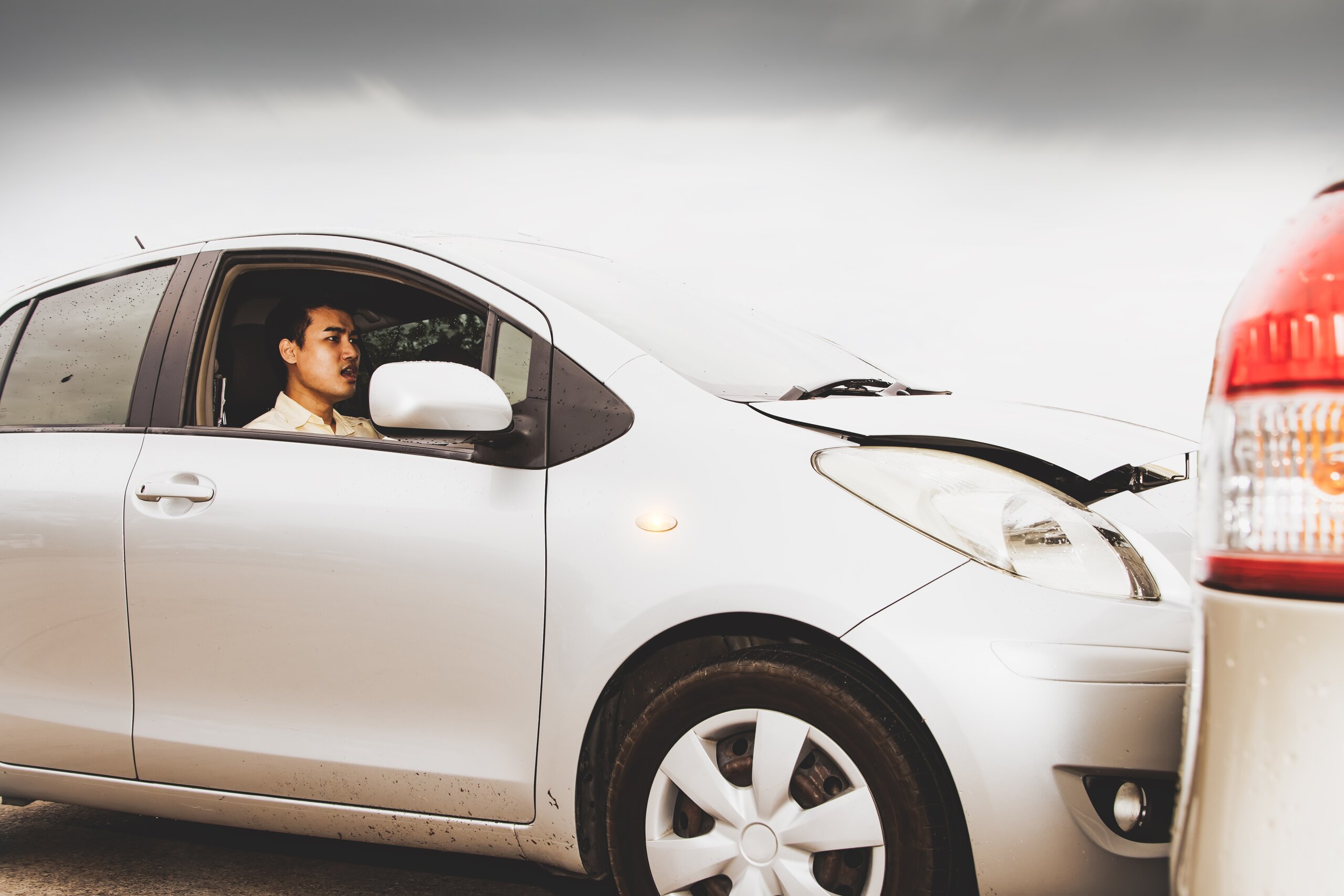
Fault for a T-bone accident typically rests with whichever driver ignored a traffic signal, stop sign, or right of way rule at the intersection. Who is at fault for a T-bone accident often comes down to a few seconds most drivers never see coming, the moment before impact when one car had the right of way and the other didn’t.
If you got hit broadside at an Oklahoma City intersection, you already know how violent and disorienting that kind of collision feels, and how quickly the other driver’s insurance company started asking pointed questions about what you were doing before the crash.
Don’t try to figure out who’s actually responsible for what happened on your own. An Oklahoma City car accident attorney can review the police report and evidence with you at no cost.
Key Takeaways: Fault in an Oklahoma City T-Bone Crash
- Fault in a T-bone crash usually hinges on who had the right of way, not just who caused the visible damage.
- Oklahoma’s comparative negligence rule allows you to recover compensation even if you share some blame, as long as you’re found less than 51 percent at fault.
- Police reports, traffic camera footage, and witness statements typically carry more weight than either driver’s own account of what happened.
- Insurance adjusters often assign fault differently than police do, since their goal is limiting what their company pays out.
- Injuries from a T-bone collision often run more severe than they first appear, especially for occupants seated on the side that took the impact.
Who Is at Fault for a T-bone Accident?
Fault for a T-bone accident generally belongs to the driver who violated the other driver’s right of way at the moment of impact.
Oklahoma City intersections see this play out constantly, whether it’s a driver running a red light on a busy stretch like Northwest Expressway or someone rolling through a stop sign in a residential neighborhood.
What Determines Fault in a T-bone Crash?
Fault in a T-bone crash comes down to traffic signals, signage, and each driver’s legal duty to yield. A driver facing a red light or stop sign owes the crossing driver the right of way, and running that signal or sign typically shifts fault onto them.
Left turn collisions work a bit differently. A driver turning left across an intersection generally owes oncoming traffic the right of way, which means the turning driver often carries fault when a T-bone happens during that maneuver, even if the light was green for both directions.
Who Usually Carries the Blame in a Side-impact Collision?
The driver who ran a signal, ignored a stop sign, or turned improperly usually carries the blame in a side-impact collision. However, that’s not automatic. Speed, distraction, and even a broken traffic signal at the intersection can shift how fault gets assigned once all the facts come out.
How Do Insurance Companies Decide T-bone Accident Fault?
Insurance companies decide T-bone accident fault by reviewing police reports, physical evidence at the scene, and each driver’s statement, then applying Oklahoma’s fault rules to assign a percentage to each side. This process rarely happens as quickly or as fairly as most people expect.
What Evidence Do Adjusters Look For?
Adjusters look for damage patterns, traffic signal timing, witness statements, and any available camera footage from nearby businesses or intersection cameras. The location and angle of the damage on both vehicles often tells its own story about who had the right of way and who didn’t.
Sometimes, an intersection’s traffic signal has a documented history of malfunctioning, which can complicate fault findings considerably. Requesting maintenance records for a traffic signal is something most drivers never think to do on their own, yet it can change an entire fault determination.
How Does Comparative Negligence Affect Your Claim in Oklahoma?
Comparative negligence in Oklahoma reduces your compensation by your percentage of fault, but only bars you from recovering anything if you’re found 51 percent or more at fault. This rule means a driver who was 20 percent responsible for a T-bone crash can still recover 80 percent of their damages.
This is where T-bone accident fault determination gets contested most often. Insurance companies frequently push fault percentages higher against the injured driver specifically to shrink what they owe, which is why having your own documentation and, ideally, your own attorney reviewing the file matters before you accept any number they offer.
What Happens When Both Drivers Share Blame for a T-bone Crash?
Both drivers sharing blame for a T-bone crash means each person’s compensation gets reduced by their own percentage of fault under Oklahoma law. This outcome happens more often than people expect, particularly at intersections where visibility is poor or where a signal timing issue contributed to the collision.
What if the Other Driver Claims You Were Partly at Fault?
The other driver claiming you were partly at fault doesn’t automatically reduce what you can recover, since that percentage still has to be proven with real evidence, not just an assertion. Insurance companies sometimes float a fault percentage early in the process specifically to see whether an unrepresented driver will accept it without pushing back.
Can You Still Recover Compensation If You Were Partially at Fault?
You can still recover compensation if you were partially at fault, as long as an insurer or court finds you less than 51 percent responsible for the crash. Here’s how that plays out with actual numbers:
If you’re found 15 percent at fault on a $50,000 claim, you’d still recover $42,500. If you’re found 40 percent at fault on that same claim, you’d recover $30,000. If you’re found 51 percent or more at fault, Oklahoma law bars recovery entirely.
Who is liable in a side-impact collision often isn’t a single, obvious answer, especially once both insurance companies start arguing over percentages. That’s exactly the kind of dispute where documentation from the scene, and a second set of eyes reviewing the police report, tends to make the biggest difference.
What Injuries Are Common in T-bone Accidents?
T-bone accidents commonly cause broken bones, head trauma, and spinal injuries, largely because the side of a car offers far less crumple zone protection than the front or rear. The occupant seated closest to the point of impact typically suffers the most severe injuries.
Why Do T-bone Crashes Cause Severe Injuries?
T-bone crashes cause severe injuries because there’s less structural steel and crumple zone space between the point of impact and the occupant’s body compared to a front or rear collision. Side airbags and reinforced door frames help, but they don’t fully make up for the shorter distance a T-bone impact travels before reaching a person.
Common injuries from these crashes include:
- Rib fractures and internal organ injuries from direct impact against the door and seatbelt.
- Traumatic brain injuries from the head striking the window, door frame, or a rapidly deploying side airbag.
- Spinal cord damage and herniated discs from the sideways force of impact.
What Compensation Can You Recover After a T-bone Accident?
You can recover compensation for medical treatment, lost wages, property damage, and pain and suffering after a T-bone accident where another driver bears fault.
Oklahoma law also allows compensation for future medical care when injuries require ongoing treatment, physical therapy, or surgery well beyond the initial hospital visit.
What Should You Do After a T-bone Accident in Oklahoma City?
Several steps can help strengthen a T-bone accident claim once you’re safely away from the intersection and have received medical attention. None of these replace medical or emergency guidance from first responders, but they can support your case down the road.
What Steps Help Strengthen Your Claim?
A few practical steps tend to help most T-bone accident claims:
- Keeping copies of all medical records and bills creates a paper trail documenting the extent of your injuries.
- Saving receipts for out of pocket costs, like prescription copays or rideshare fares to appointments, helps establish your economic losses.
- Writing down how your injuries affect daily tasks, sleep, or your ability to work can support a pain and suffering claim later.
- Requesting a copy of the police report early lets you review how fault was initially documented at the scene.
Many claimants find it helpful to bring this information to an attorney consultation, since a more complete picture usually leads to a more accurate case evaluation from the start.
| Action Item | Purpose |
|---|---|
| Maintain comprehensive medical records | Creates a clear paper trail verifying the severity of your injuries and total treatment costs. |
| Track out-of-pocket expenses | Organizes receipts (e.g., prescriptions, transportation) to accurately calculate your total economic losses. |
| Document personal impact | Keeps a log of how injuries affect your sleep, work, and daily life, which strengthens claims for pain and suffering. |
| Obtain police reports early | Allows you to review how the responding officer documented fault at the scene before insurance investigations proceed. |
Why Does Working with an Attorney Matter after a T-bone Crash?
Working with an attorney matters after a T-bone crash because fault disputes in these cases often turn into a battle between two insurance companies, each trying to shift blame away from their own policyholder.
Traffic signal timing records, intersection camera footage, and accident reconstruction sometimes become necessary to sort out what actually happened, and requesting or interpreting that evidence isn’t something most people have done before.
An attorney knowledgeable in Oklahoma’s comparative negligence rules can also push back when an adjuster tries to assign you a higher fault percentage than the evidence supports.
That pushback often becomes the difference between a fair settlement and one that quietly shortchanges you by 20 or 30 percent.
Frequently Asked Questions About Fault in T-Bone Accidents in OK
Who determines fault after a T-bone accident in Oklahoma City?
Fault gets determined through a combination of the police report, physical evidence, witness statements, and each driver’s insurance company conducting its own investigation. If both companies disagree on fault percentages, the dispute can eventually require a court to decide.
Can traffic camera footage really prove who ran the light?
Yes, when available, traffic camera or nearby business security footage often provides some of the clearest evidence in a T-bone case, since it removes guesswork about signal timing and driver behavior. Not every intersection has working cameras, so requesting footage quickly matters before it gets overwritten.
Does it matter if the other driver got a ticket at the scene?
A citation carries weight but doesn’t automatically decide fault in a civil injury claim, since a criminal or traffic court finding and an insurance fault determination are separate processes. It can still serve as useful supporting evidence when building your case.
How long do I have to file a claim after a T-bone accident in Oklahoma?
Oklahoma generally allows two years from the date of the crash to file a personal injury lawsuit. However, certain claims, like those involving a government vehicle, require much earlier notice. Confirming your specific deadline early protects you from losing the ability to pursue compensation altogether.
What if the police report says I was at fault, but I disagree?
A police report reflects one officer’s assessment at the scene, not a final legal determination of fault, and reports do get successfully challenged with additional evidence. Dashcam footage, witness statements, or a fresh look at the intersection’s signal history can all support a different conclusion than what’s on the report.
Talk to Branch & Dhillon, P.C. About Your T-bone Accident Claim
If a T-bone accident in Oklahoma City left you hurt or dealing with a loved one’s injuries, call Branch & Dhillon, P.C. at 405-237-8107 for a free case evaluation.
We’ll go through the police report, the fault percentages being thrown around, and what your claim might actually be worth, and you won’t owe us anything unless we recover money on your behalf.
Branch & Dhillon, P.C. 201 Robert S. Kerr Ave Ste 905, Oklahoma City, Oklahoma 73102