

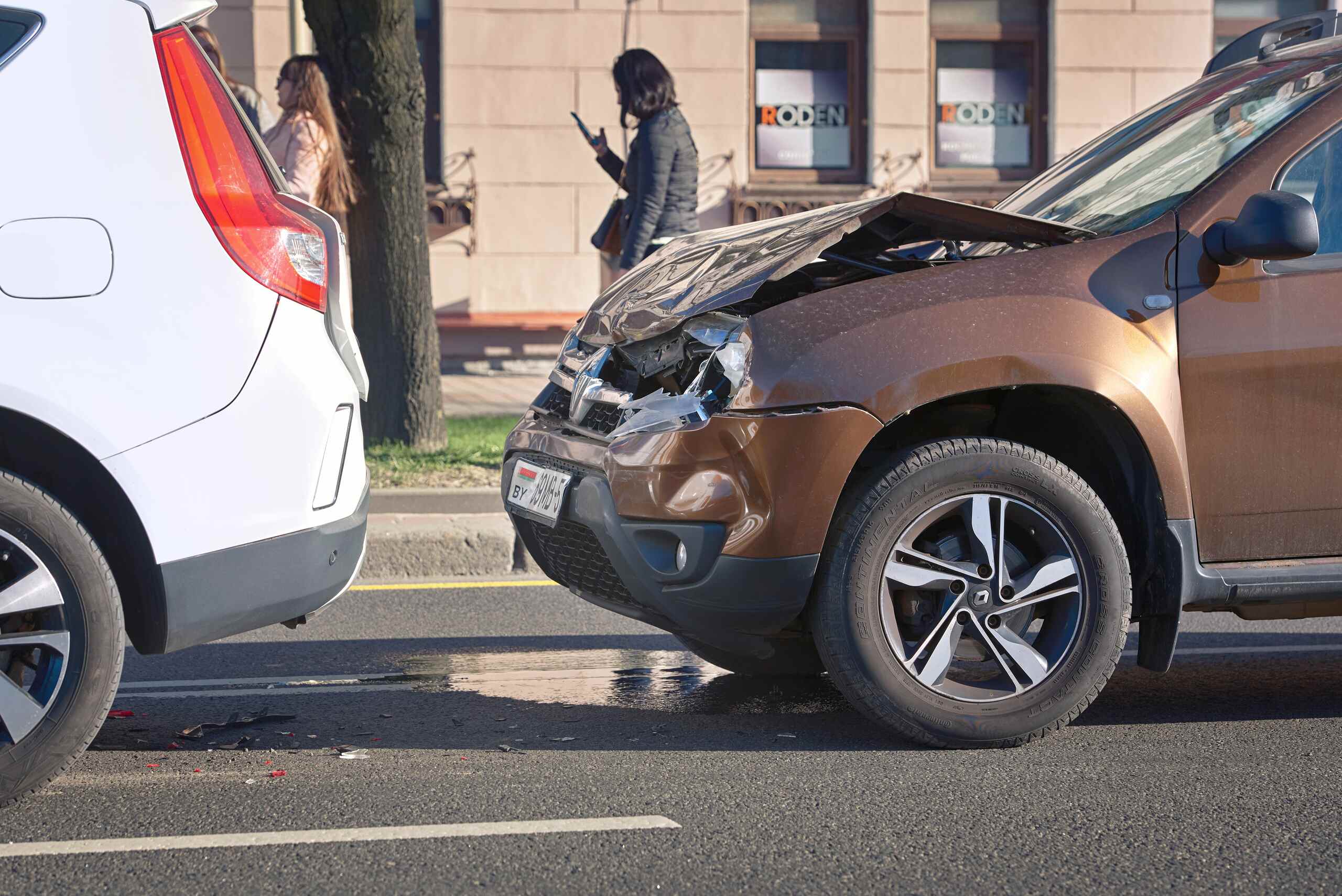
Oklahoma City rear-end accident lawyers at Branch & Dhillon represent people who suffer injuries in rear-end collisions caused by another driver’s negligence. We take these cases on a contingency fee basis, so you pay no attorney fees unless we recover money for you.
Rear-end accidents look straightforward on paper, but the insurance company treats them like anything but.
The adjuster’s goal is to minimize what your injuries are worth, often by arguing the collision was too minor to cause real harm. That tactic works until an attorney steps in with medical evidence that tells a different story.
If you were rear-ended and the other driver’s insurer is pushing a low offer, call (405) 237-8107 for a free case review before you accept anything.
How Does Branch & Dhillon Fight Back Against Low-Impact Defenses?

Branch & Dhillon counters the low-impact defense by building a medical and technical record that the insurance company has difficulty dismissing.
The low-impact defense is one of the most common tactics insurers use to reduce rear-end claims, and beating it requires a specific approach from the start.
Adjusters argue that minor vehicle damage means minor injuries. That argument weakens considerably when your attorney presents medical evidence showing measurable physical harm.
Medical Documentation That Challenges the Minor-Impact Argument
Your attorney coordinates with your treating physicians to document the full timeline and severity of your injuries. Objective findings from imaging, physical therapy notes, and records of ongoing pain all push back against the insurer’s position.
Symptoms of whiplash, disc problems, and soft tissue damage frequently become noticeable or worsen in the days and weeks following a rear-end collision, even when the vehicle damage looks modest.
Direct Attorney Involvement and Contingency Fee
Our Oklahoma City office at 201 Robert S. Kerr Ave, Ste 905, sits near Oklahoma County District Court. Your attorney handles the case directly from intake through resolution.
You pay no attorney fees unless we obtain a recovery, and case expense details appear in the written fee agreement before we begin.
If you were hit from behind in a traffic crash, discover what factors likely caused your crash by reading our guide on the common causes of rear-end collisions.
Why Do Insurance Companies Fight Rear-End Claims So Aggressively?
Insurance carriers fight rear-end claims aggressively because these cases represent a large share of all auto accident payouts.
Reducing even small amounts across thousands of claims saves the insurer significant money, so adjusters apply the same cost-cutting approach to every file.
- Adjusters commonly argue that low vehicle damage means low injury severity, even though occupant injury does not always correlate with visible damage.
- The insurer may request years of your prior medical records and then argue that your pain existed before the accident.
- Adjusters often push early settlement offers before your treatment is complete and before the full cost of your injuries becomes clear.
- The insurer may hire a doctor who reviews your records on paper and reaches different conclusions than your treating physician, without ever examining you.
Each of these tactics targets the same assumption: that a rear-end victim expects an easy resolution and may accept less just to move on.
How Does Fault Work in an Oklahoma City Rear-End Accident?
The rear driver is frequently found at fault in a rear-end collision because Oklahoma law requires all drivers to maintain a safe following distance under 47 O.S. § 11-310. That following-distance duty gives the front driver a strong starting position, but fault must still be determined by the evidence in each case.
When the Rear Driver Disputes Fault
The rear driver’s insurer may argue that the front driver contributed to the accident through sudden braking, broken brake lights, or an abrupt lane change.
Oklahoma follows a modified comparative negligence rule under 23 O.S. § 13. You may recover damages as long as your percentage of fault does not exceed the fault attributed to the defendant or defendants from whom you seek recovery.
In a typical two-driver case, a plaintiff found more than 50% responsible is barred from recovery, while a plaintiff at exactly 50% may still recover 50% of the proven damages.
Multi-Vehicle Chain Reaction Collisions
Rear-end accidents along OKC’s congested I-35 and I-44 corridors sometimes involve three or more vehicles. Fault in a chain-reaction collision is harder to assign because multiple drivers may share responsibility.
Your attorney reconstructs the sequence of impacts and determines which driver’s actions triggered the chain.
What Injuries Result from Rear-End Collisions?
Rear-end collisions cause injuries tied to the way the occupant’s body absorbs the sudden forward-and-backward motion of impact. Many of these injuries produce symptoms that develop or intensify over days or weeks, which is why the insurer’s early assessment often understates the harm.
The table below outlines injuries commonly associated with different rear-end impact scenarios. Individual outcomes vary based on occupant position, seatbelt use, headrest adjustment, and pre-existing conditions.
Common Rear-End Collision Injuries by Impact Scenario
| Impact Scenario | Injuries That May Result | Potential Treatment Path |
| Lower-speed (under 15 mph) | Whiplash, cervical strain, soft tissue sprains, headaches, jaw pain | Physical therapy over weeks to months; some cases may produce lingering symptoms |
| Moderate-speed (15 to 40 mph) | Disc herniations, concussion, shoulder injuries, lumbar strain | Months of treatment; may involve injections, imaging, or surgical evaluation |
| Higher-speed (over 40 mph) | Spinal fractures, traumatic brain injury, internal organ damage | Extended hospitalization, surgery, long-term rehabilitation; some injuries may produce permanent effects |
Even lower-speed impacts may produce injuries that require sustained medical attention. That mismatch between modest vehicle damage and real occupant harm is one of the primary arguments insurance carriers exploit.
What Evidence Strengthens a Rear-End Accident Claim?
The evidence that strengthens a rear-end accident claim connects the force of the impact to the injuries you suffered and the losses you incurred. Strong rear-end claims in Oklahoma City typically rely on these categories of proof.
- The police report documenting the at-fault driver’s position and any citations issued, which may support your account though it does not establish civil liability on its own.
- Photographs of vehicle damage from all angles, including bumper compression, frame displacement, and airbag deployment.
- Medical records from the first emergency visit through every follow-up, imaging study, and therapy session.
- Treating physician testimony explaining how the collision mechanism relates to your specific diagnosis.
- Lost wage documentation from your employer confirming days missed and inability to perform job duties during recovery.
The strongest cases tie the physical evidence of the crash to the medical evidence of the injury in a way that makes the insurer’s low-impact argument difficult to maintain.
Call (405) 237-8107 to find out what your rear-end accident claim may involve. That conversation is free.
What Damages May You Recover After a Rear-End Accident in Oklahoma?
Oklahoma law allows people injured in rear-end crashes to seek both economic and noneconomic damages. Economic damages, such as medical bills and lost wages, do not have a legal limit. The rules for noneconomic damages depend on the date of the injury.
For injuries occurring on or after September 1, 2025, Oklahoma law generally limits noneconomic damages to $500,000.
Different limits or exceptions may apply when the plaintiff proves a permanent mental injury causing severe impairment, a permanent and severe physical injury, or certain aggravated misconduct identified in the statute.
The application of these exceptions depends on the evidence and the findings required by 23 O.S. § 61.3.
The Oklahoma Supreme Court has not yet ruled on whether this new limit is constitutional. Injuries that occurred before September 1, 2025, may be governed by the laws and court rulings that were in effect before the new statute.
Rear-end accident claims in Oklahoma City often include the following types of losses.
- Medical expenses for emergency treatment, imaging, physical therapy, injections, and any surgical procedures related to the crash.
- Lost wages from missed work during treatment and recovery.
- Reduced earning capacity if the injury limits your ability to return to your previous job.
- Physical pain and discomfort from the injuries and the treatment required to address them.
- Emotional distress tied to chronic pain, anxiety about driving, and disruption to your daily routine.
Oklahoma Filing Deadlines for Rear-End Accident Claims
Oklahoma gives rear-end accident victims two years from the date of the crash to file a civil lawsuit under 12 O.S. § 95. Missing that deadline may permanently end your right to pursue the claim.
Claims involving government vehicles or entities may carry shorter notice requirements under the Oklahoma Governmental Tort Claims Act, so speaking with an attorney promptly is the safest approach.
Why Waiting Hurts Rear-End Cases
Gaps in medical treatment give the insurer an argument that your injuries did not require consistent care. Witnesses become harder to locate. And the at-fault driver’s insurer gains time to build its defense without opposition.
The National Highway Traffic Safety Administration (NHTSA) identifies rear-end crashes as among the most common collision types in the United States. Insurers handle thousands of them every year and have refined their defense strategies accordingly.
Speaking with a rear-end accident lawyer early gives you a better chance of countering those strategies before they reduce the value of your claim.

FAQs for Oklahoma City Rear-End Accident Lawyers
What if the other driver says I brake-checked them?
The rear driver’s insurer may argue that you braked suddenly to cause the collision. Your attorney may counter this with dashcam footage, traffic camera recordings, or witness statements showing you had a legitimate reason to slow down.
Oklahoma law requires all drivers to maintain a safe following distance, so even a sudden stop may not shift liability if the rear driver followed too closely.
What if I had a pre-existing neck or back condition before the accident?
A pre-existing condition does not prevent you from pursuing a rear-end accident claim. Oklahoma law recognizes the eggshell plaintiff doctrine, which means the at-fault driver takes the victim as they find them.
If the collision aggravated a pre-existing condition, the at-fault driver’s insurer may be responsible for the worsening. Your attorney documents the difference between your condition before and after the crash.
How long does a rear-end accident case take to settle?
Most rear-end cases in Oklahoma take several months to over a year to settle, depending on injury severity and whether the insurer disputes liability or damages.
Settling before you finish treatment may result in a lower recovery because the full cost of your care might not yet be known.
Does Oklahoma cap damages in a rear-end accident case?
Oklahoma does not cap economic damages. For injuries on or after September 1, 2025, noneconomic damages are generally capped at $500,000 under 23 O.S. § 61.3, with a higher cap of $1,000,000 for permanent mental injuries causing severe impairment.
The cap does not apply when the defendant acted with reckless disregard or engaged in certain aggravated conduct. The new statute has not yet been reviewed for constitutionality. Punitive damages follow a separate three-tier system under 23 O.S. § 9.1.
How much does a rear-end accident lawyer in Oklahoma City charge?
A rear-end accident lawyer at Branch & Dhillon charges no attorney fees upfront. We work on contingency, so our fee comes only from the recovery we obtain for you.
If there is no recovery, you owe no attorney fees. Case expense responsibility appears in the written fee agreement you receive before we begin.
What if my car barely has any damage but I am still in pain?
Visible vehicle damage does not determine injury severity. Occupants in lower-speed rear-end collisions frequently suffer whiplash, disc problems, and concussions that require months of treatment.
Your attorney builds the case around your medical records and documented symptoms, not around the dent in your bumper.
Do I need a lawyer if the other driver got a ticket?
A traffic citation may support your account of the crash, but it does not automatically establish civil liability or determine the value of your claim. Whether you would benefit from hiring a lawyer depends on factors such as the seriousness of your injuries, disputed fault, available insurance coverage, and the insurer’s position.
Make the Insurance Company Take Your Oklahoma City Rear-End Accident Seriously

The insurer is betting that you accept a quick, low number because the fault seems obvious and the process feels like it ought to be simple. That calculation works in their favor until an attorney steps in with the medical evidence, documented losses, and full picture of what your claim actually involves.
Branch & Dhillon takes rear-end accident cases in Oklahoma City on contingency. You pay no attorney fees unless we recover money for you.
Call (405) 237-8107 and let us review the offer on the table, your medical records, and the real scope of your claim. That first conversation costs you nothing.
The information on this page is for general informational purposes only and does not constitute legal advice. Every case is different, and past results do not guarantee future outcomes. Contact Branch & Dhillon to discuss the specific facts of your situation.
