

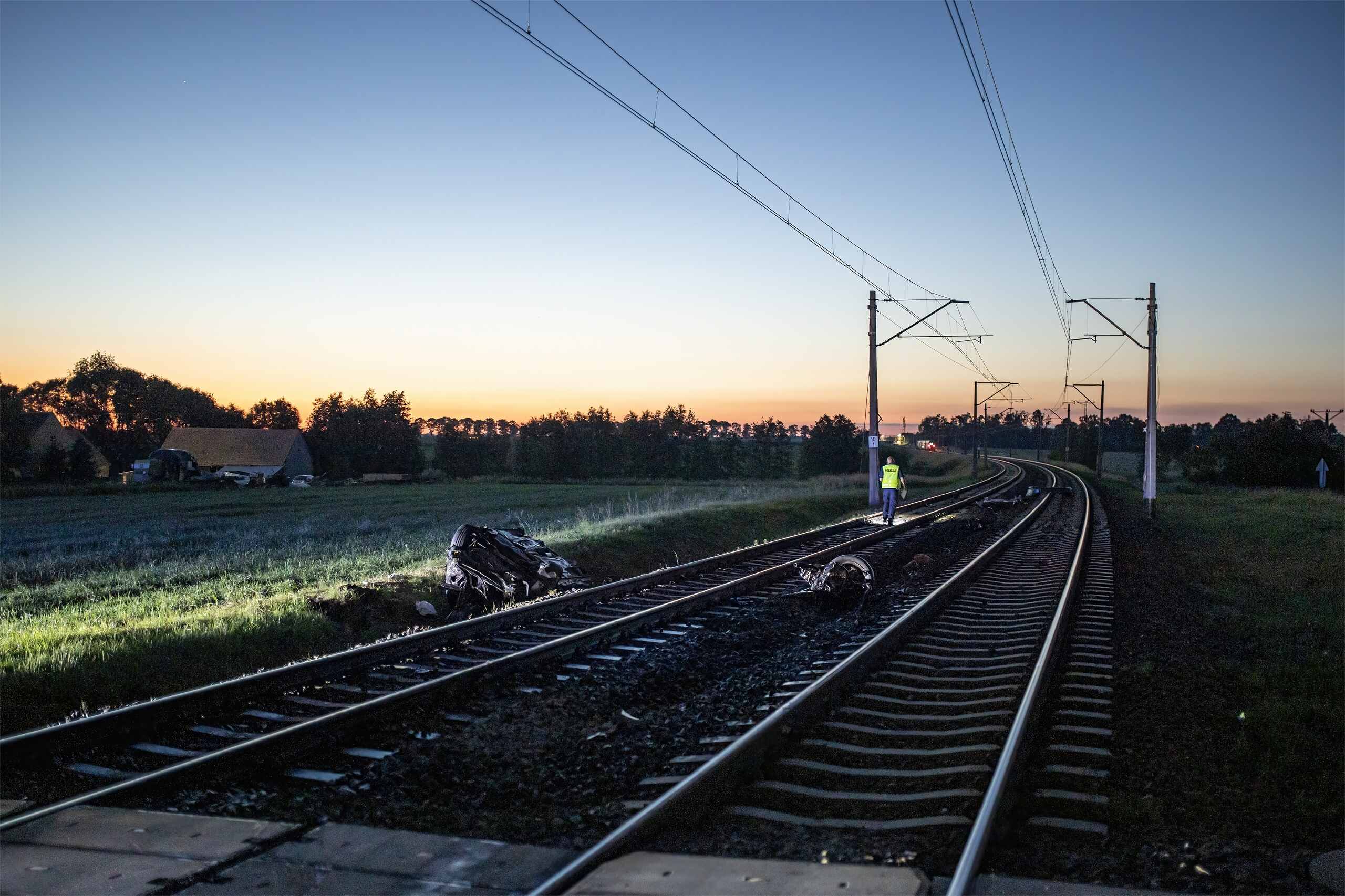
A train accident can cause devastating injuries and sudden financial uncertainty for victims and their families. At Branch & Dhillon, our Oklahoma City train accident attorneys respond with compassionate guidance and determined legal representation during a difficult time.
Railroad companies may begin protecting their interests immediately after an accident. Their claim agents and investigators represent the railroad—not you.
We act quickly to preserve evidence, determine what happened, identify responsible parties, and build a strong claim for medical bills, lost wages, pain and suffering, and other losses.
There are no upfront attorney fees. You pay nothing for our legal services unless we recover compensation for you.
If you or a family member was injured in a train accident, call Branch & Dhillon at (405) 237-8107 before giving a recorded statement or accepting an offer from the railroad. Your consultation is free.
What Does the Railroad Already Know About Your Case?

The railroad likely gathered more information about your accident in the first 48 hours than you realize. Many major railroads employ their own commissioned police officers with actual law enforcement authority, and they send response teams to serious incidents right away.
By the time you start thinking about legal options, the railroad may have already completed several steps designed to protect itself. The railroad’s early response typically includes the following actions.
- A claim agent contacts you at the hospital or at home, asks about the accident, and records your answers in a written or recorded statement.
- Railroad police officers or company investigators document the scene, photograph the crossing, and interview witnesses independently of local law enforcement.
- Locomotive event recorders, which function like a black box, capture speed, braking, and horn data from the moments before the collision.
- The company preserves crossing signal maintenance logs, but those records stay in the railroad’s possession unless your attorney formally demands them through civil discovery.
- Internal incident reports circulate within the railroad’s legal department, shaping the company’s narrative before you have a chance to present yours.
Nothing the railroad collects during this process serves your interests. Branch & Dhillon closes that gap by pursuing the same categories of evidence independently.
Our downtown OKC office at 201 Robert S. Kerr Ave, Ste 905, puts us near both Oklahoma County District Court and the federal courthouse.
You keep full control over every major decision in your case, including whether to accept a settlement or go to trial. We advise and prepare your options, but the final call stays with you.
Where Do Train Accidents Happen Most Often Around Oklahoma City?
Railroad crossing collisions represent the most common type of train accident claim in central Oklahoma.
The OKC metro sits at a major freight rail junction where BNSF Railway and Union Pacific operate heavy train traffic through residential areas, commercial corridors, and rural stretches of Canadian, Cleveland, and Oklahoma counties.
Train accident claims across the OKC area frequently arise from these types of incidents.
- Vehicle-train collisions at at-grade crossings, meaning locations where the road and the tracks meet at the same level without a bridge or overpass.
- Pedestrian-train accidents near rail yards, along tracks that run through neighborhoods, or at crossings without sidewalk barriers.
- Amtrak Heartland Flyer incidents involving passengers injured aboard the train or bystanders struck at station-area crossings between Oklahoma City and Fort Worth.
- Freight derailments that cause property damage, hazardous material exposure, or physical injury to nearby residents or motorists.
- Trespasser injuries on railroad property where the railroad failed to secure access in areas with known foot traffic, particularly near schools or residential neighborhoods.
Many rural crossings outside the OKC metro rely solely on crossbuck signs, which are the X-shaped signs posted at crossings. These passive crossings have no gates, no flashing lights, and no bells.
A collision at one of these locations raises questions about whether the crossing had adequate protection, though federal preemption rules may affect which legal theories are available depending on the specific facts.
Who Bears Liability When a Train Hits a Vehicle at a Crossing?
Liability for a train-vehicle collision at a railroad crossing depends on which parties failed to meet their safety obligations. The railroad, the government entity responsible for the crossing, and the driver may all share some degree of fault depending on the facts.
Federal law under the Federal Railroad Administration (FRA) requires railroads to inspect, test, and maintain all active warning systems at crossings.
State and local governments hold responsibility for signage, road markings, sight lines, and decisions about which crossings receive upgraded warning equipment, though some of those decisions may be protected by statutory immunities or discretionary-function defenses.
The table below breaks down the most common parties involved in crossing accident liability and where their obligations fall.
Crossing Accident Liability in Oklahoma
| Responsible Party | Primary Obligation | Common Failures |
| Railroad company | Maintain active warning systems, sound horn, operate at safe speed | Broken gates or signals left unrepaired, failure to sound horn in required zones, obstructed sight lines from overgrown vegetation on railroad property |
| State or local government | Design and maintain the roadway approach, post signage, decide on crossing upgrades (subject to statutory immunity and discretionary-function defenses) | Poor pavement markings, missing advance warning signs, failure to act on documented collision history at a specific crossing |
| Train crew | Operate the locomotive safely and follow signal protocols | Failure to activate horn at the required distance, inattention to crossing conditions |
| Motor vehicle driver | Obey crossing signals, stop when required, look before crossing | Running a lowered gate, failing to yield at a passive crossing, distracted driving near tracks |
Oklahoma’s modified comparative negligence rule under 23 O.S. § 13 applies to train accident cases.
You may recover damages as long as your percentage of fault does not exceed the fault attributed to the party or parties from whom you seek recovery. Your award decreases proportionally by your assigned fault.
Federal Preemption and Its Effect on Your Claim
Federal preemption may limit certain legal theories in train accident cases. A claim that a train traveled below the federally authorized speed limit, or that federally funded warning devices at a crossing were inadequate, may be preempted by federal railroad law. The U.S. Supreme Court has recognized both forms of preemption in prior rulings.
However, claims based on a railroad’s failure to comply with existing federal standards, malfunctioning equipment, failure to maintain installed warning devices, or other case-specific negligence may remain available.
Your attorney evaluates which theories apply to your situation based on the crossing’s federal funding history, the warning equipment in place, and the specific conduct involved.
How Do Federal Railroad Safety Rules Affect a Train Accident Claim?
Federal railroad safety regulations set minimum standards for train operations, crossing equipment, and track maintenance across the country. The FRA enforces these rules, and a documented violation may serve as evidence of negligence in your civil case.
Several areas of federal regulation frequently surface in train accident litigation in Oklahoma.
- Locomotive horn requirements under 49 CFR Part 222 generally require train crews to begin sounding the horn 15 to 20 seconds before the locomotive enters a public crossing, with exceptions for designated quiet zones and other qualifying circumstances.
- Crossing signal maintenance rules under 49 CFR Part 234 require railroads to test, inspect, and repair all active warning devices according to specific intervals and standards.
- Track safety standards under 49 CFR Part 213 set minimum requirements for rail integrity, ties, ballast, and drainage that affect train stability and braking performance.
- Federal hours of service laws and related regulations, including provisions in 49 CFR Part 228, limit crew duty periods and mandate rest requirements to reduce fatigue-related errors by train operators.
A federal safety violation does not automatically establish liability, but it may strengthen your claim by showing that the railroad fell below the minimum standard of care the government set for safe operations.
Call (405) 237-8107 to have an attorney review the federal and state dimensions of your train accident case. No charge applies to that conversation.
What Compensation Might a Train Accident Claim in Oklahoma Involve?
Train accident claims in Oklahoma frequently involve catastrophic or fatal injuries because of the massive force involved in any collision with a locomotive or rail car.
Oklahoma law permits victims and surviving family members to seek both economic and noneconomic damages, with no statutory cap on economic losses.
For injuries occurring on or after September 1, 2025, 23 O.S. § 61.3 may cap noneconomic damages at $500,000, though this statute remains subject to potential constitutional challenge and has not yet faced review by the Oklahoma Supreme Court.
The cap may rise to $1,000,000 for permanent mental injuries causing severe impairment and may not apply at all when aggravated conduct is proven by clear and convincing evidence.
Categories of Loss in Train Accident Claims
Train accident damage claims in Oklahoma City frequently cover these types of losses.
- Emergency medical care, trauma surgery, hospitalization, and extended rehabilitation for collision survivors.
- Long-term care needs including assistive devices, home modifications, and ongoing therapy for permanent injuries.
- Lost earning capacity when the injury prevents a return to previous employment or limits future professional options.
- Wrongful death claims by surviving family members covering loss of financial support, companionship, and burial costs.
- Pain and emotional suffering experienced by the injured person or surviving family, particularly in cases involving permanent disability or disfigurement.
The size of these claims reflects the severity of the injuries, and railroad companies staff their defense teams accordingly.
What Deadlines Apply to a Train Accident Case in Oklahoma?
Oklahoma’s statute of limitations gives train accident victims two years from the date of the collision to file a civil lawsuit under 12 O.S. § 95. Wrongful death claims carry a two-year window measured from the date of death.
Claims Involving Amtrak or Government Entities
Claims involving Amtrak may raise additional issues concerning the proper defendants, federal jurisdiction, contractual notice provisions, and which entity owned or maintained the track and crossing where the accident occurred.
An Amtrak claim is not automatically governed by the Federal Tort Claims Act or a special governmental notice deadline. However, because Amtrak operations may involve multiple public and private entities, your attorney must identify every potentially responsible party promptly.
Accidents on tracks or at crossings maintained by a state or local government entity may trigger the Oklahoma Governmental Tort Claims Act. That statute imposes a shorter notice period than the general two-year limitations deadline.
Missing these earlier deadlines may permanently close the door on part of the claim.
Why the Railroad’s Head Start Grows Over Time
The railroad began documenting its position the day of the accident. Every week that passes without your own legal representation is a week where only the railroad’s version of events takes shape.
Witness memories shift. Physical conditions at the crossing change with repairs and routine maintenance. And any statement you gave to the claim agent remains in the railroad’s file, potentially working against you.
FAQs for Oklahoma City Train Accident Attorneys
Do I have a case if my car was hit by a train at a crossing with gates?
Possibly, yes. A collision at a gated crossing does not automatically mean the driver bears all fault. The gates may have malfunctioned, the warning activation time may have fallen short of federal requirements, or sight-line obstructions may have prevented the driver from seeing the approaching train.
Your attorney reviews the crossing signal maintenance records and event recorder data to evaluate how the warning system performed.
What if the train was going faster than the posted speed?
A train exceeding the federally authorized speed for its track classification may strengthen your claim, depending on the specific circumstances. Your attorney obtains the locomotive event recorder data to verify the train’s speed at the time of impact.
However, federal preemption may limit claims arguing that a train traveling within the authorized speed limit was nonetheless going too fast for conditions. The preemption analysis depends on the specific facts of the case.
What if a family member died in a train accident in Oklahoma?
Oklahoma wrongful death law allows surviving spouses, children, and qualifying family members to pursue damages for loss of companionship, financial support, and funeral expenses.
The two-year filing period runs from the date of death. Because railroad companies defend these claims aggressively, preserving evidence and identifying every responsible party early in the process is a priority.
What if the railroad’s claim agent offered me a settlement already?
Speaking with an attorney before accepting any railroad settlement offer is strongly recommended. Railroad claim agents frequently extend early offers before the injured person understands the full scope of their injuries and losses.
Accepting a settlement typically requires signing a release that permanently ends your right to pursue any additional compensation, even if your condition worsens.
What does it cost to hire Oklahoma City train accident attorneys?
Branch & Dhillon takes train accident cases without any upfront fees for legal services. Our compensation comes solely from the outcome of your case.
If there is no recovery, you owe nothing for attorney services. Written details about expense responsibility appear in the agreement you sign before we begin.
What if I already gave a statement to someone from the railroad?
Giving a statement to the railroad’s claim agent does not end your ability to pursue a case. Many train accident victims speak with railroad representatives before realizing those representatives work for the company.
Your attorney reviews what you said, identifies any issues created by that statement, and builds the case around the complete body of evidence rather than one early conversation.
What if the crossing had no gates or flashing lights?
A crossing without active warning devices, known as a passive crossing, may support a claim depending on the specific facts and the crossing’s history.
Federal preemption may limit some theories about inadequate warning equipment, particularly if federal funding decisions influenced the crossing’s configuration.
Your attorney evaluates the crossing’s collision record, federal funding history, and maintenance documentation to determine which legal theories remain available.
Close the Gap Between the Railroad’s Preparation and Yours

The railroad had a team working on your case before you left the hospital. Their agents collected statements.
Their officers documented the scene. Their lawyers reviewed the file. All of that happened on the railroad’s timeline and in the railroad’s interest. None of it was done for you.
Branch & Dhillon takes train accident cases across the Oklahoma City area without collecting any upfront legal fees. You owe nothing for our services unless your case results in a recovery.
Call (405) 237-8107 and let us see where things stand. We review the railroad’s response, assess the available evidence, and start building the other side of the story. That conversation comes at no cost.
The information on this page is for general informational purposes only and does not constitute legal advice. Every case is different, and past results do not guarantee future outcomes. Contact Branch & Dhillon to discuss the specific facts of your situation.
