

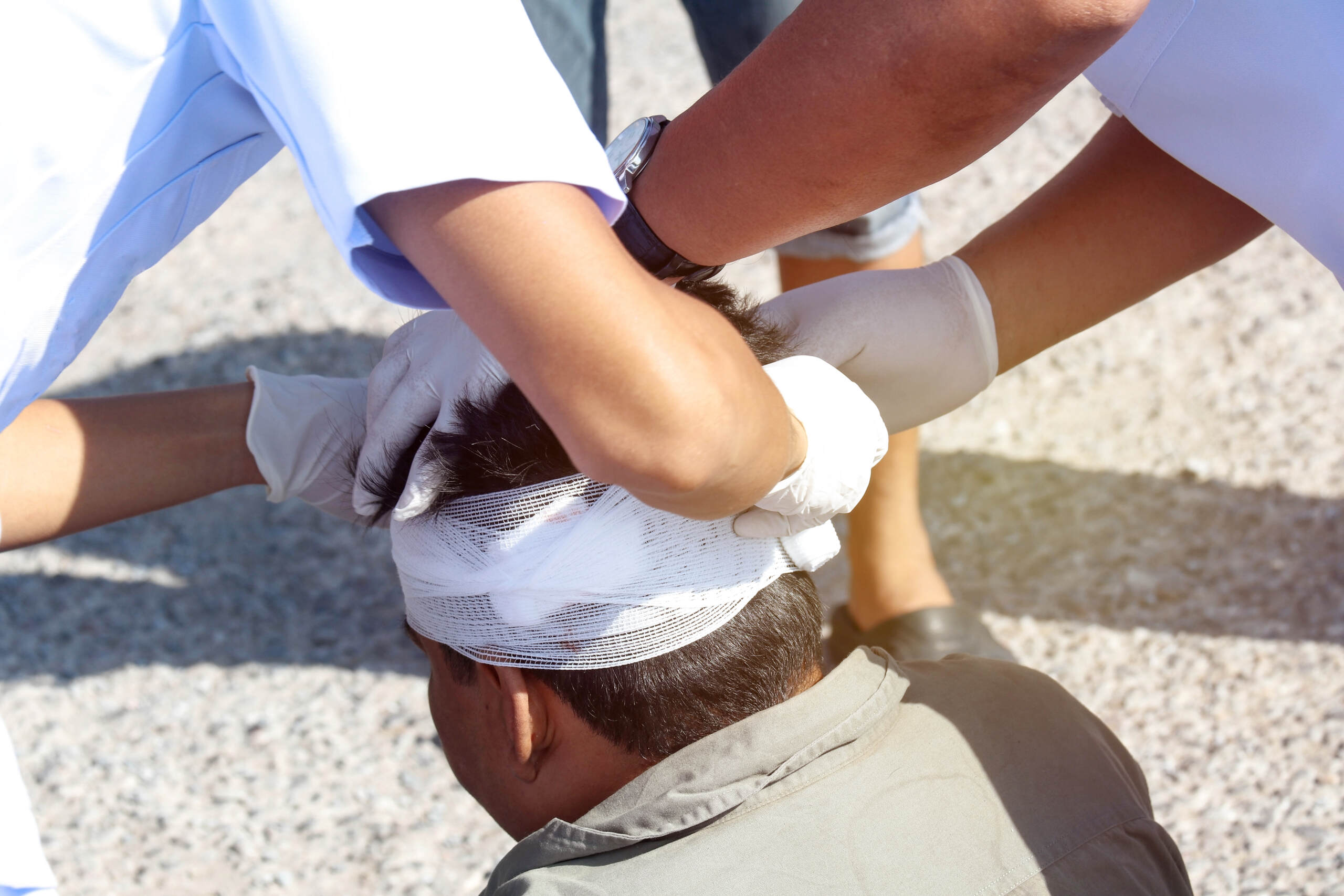
Branch & Dhillon represents people in Oklahoma City who suffer traumatic brain injuries because of someone else’s negligence. Our attorneys take TBI cases on a contingency fee basis, which means you pay nothing unless we recover money for you.
A traumatic brain injury may not appear on a standard CT scan or MRI, but it still changes how you think, work, and relate to the people around you. Insurance carriers often rely on normal imaging results to minimize these claims and push low settlement numbers.
An Oklahoma City traumatic brain injury attorney at our firm knows how to build the medical and legal record that connects what you experience every day to the accident that caused it.
If you or a family member suffered a head injury in an accident and the symptoms have not gone away, call (405) 237-8107 for a free case review. Early review of your medical records may help strengthen your position.
What Does It Take to Prove a Traumatic Brain Injury Case in Oklahoma City?

Proving a traumatic brain injury (TBI) case requires medical evidence that ties cognitive, behavioral, or physical changes directly to the accident.
Standard imaging may miss the injury entirely, which means your legal team must build the case through other diagnostic tools and detailed documentation.
Branch & Dhillon approaches TBI cases differently because we understand that the proof often lives outside the radiology report. A TBI claim filed in Oklahoma County typically requires evidence from multiple sources working in combination.
Medical and Diagnostic Evidence Your Attorney Needs
Building a strong TBI case means collecting the right records from the right providers. The type of evidence your attorney gathers often determines whether the insurance company takes the claim seriously or tries to minimize it.
- Neuropsychological testing measures changes in memory, attention, processing speed, and executive function that standard scans do not capture.
- Functional MRI (fMRI) or diffusion tensor imaging (DTI) scans may help identify abnormalities that standard imaging misses.
- Treating neurologist records document symptom progression over weeks and months following the accident.
- Testimony from family members, coworkers, or friends may describe personality and cognitive changes they observed after the injury.
- Vocational assessment reports show how the brain injury limits your ability to perform your job or earn at your previous level.
The difference between a TBI claim that gets dismissed and one that holds up often comes down to how thoroughly the medical record is built before the insurer makes its first offer.
Our Approach to Brain Injury Cases in OKC
Our Oklahoma City office at 201 Robert S. Kerr Ave, Ste 905, sits close to Oklahoma County District Court. Your attorney works your case directly from intake through resolution. We charge nothing up front and collect no fee unless we recover money for you.
Why Do Insurance Companies Fight So Hard Against TBI Claims?
Insurance carriers resist traumatic brain injury claims more aggressively than many other injury types because the evidence is harder to pin down and the lifetime costs run high.
A TBI that appears mild on paper may produce years of cognitive rehabilitation, lost productivity, and emotional disruption.
Insurers often use the ambiguity around brain injury diagnosis to their advantage. Some of the most common tactics in TBI cases reflect a pattern of pushing back on evidence that does not fit neatly into a medical chart.
- Adjusters often point to a normal CT scan or MRI as proof that no brain injury occurred, even though the Centers for Disease Control and Prevention (CDC) confirms that mild TBI often does not appear on standard imaging.
- Insurance representatives may label the injury as a simple concussion and treat it as a short-term problem with no lasting effects.
- Defense neuropsychologists hired by the carrier may run their own testing and reach different conclusions than the treating provider.
- Adjusters may argue that cognitive or mood symptoms existed before the accident based on cherry-picked medical history.
- The carrier may delay the claims process in hopes that financial pressure pushes you toward a low offer.
Each of these moves targets the same weakness in your file: limited medical documentation. Building a thorough record early is the most effective way to counter every tactic on this list.
What Evidence Builds the Strongest TBI Claim in Oklahoma?
The strongest TBI claims in Oklahoma combine multiple forms of evidence that independently confirm the injury and its impact on daily life.
No single test or record proves a brain injury claim on its own, but the right combination makes the case very difficult to dismiss.
The table below breaks down the types of evidence that matter most and how each one strengthens your position from a legal standpoint.
Evidence Used to Prove TBI Claims in Oklahoma City
| Type of Evidence | What It Documents | How It Strengthens Your Claim |
| Neuropsychological testing | Changes in memory, attention, and processing speed | Proves measurable cognitive decline that imaging may miss |
| Advanced imaging (DTI or fMRI) | Structural or functional brain changes | May provide supporting evidence of brain changes when CT and MRI appear normal |
| Treating physician records | Symptom timeline and progression from date of injury | Connects the brain injury to the accident through documented medical history |
| Witness statements | Observable behavioral and personality changes | Corroborates the injured person’s symptoms with third-party observations |
| Vocational assessment | Impact on work capacity and earning ability | Quantifies lost earning capacity for the damages calculation |
An insurance company builds its defense around what is missing from your file. Your attorney’s job is making sure nothing is missing. That preparation often shapes the outcome more than any single piece of evidence.
What Causes Traumatic Brain Injuries in Oklahoma City?
Falls and motor vehicle accidents account for the largest share of TBI-related hospitalizations nationally, according to the CDC.
In the Oklahoma City metro, high-speed traffic along I-35, I-40, and I-44 makes collision-related brain injuries a persistent concern, especially during winter ice events.
TBI cases our firm handles in the OKC area often trace back to specific types of accidents that produce sudden, violent force to the head or body.
- High-speed vehicle collisions may cause the occupant’s head to strike the steering wheel, window, or headrest on impact.
- Rear-end crashes produce violent whiplash motion that forces the brain to shift inside the skull, even without direct head contact.
- Pedestrian knockdowns near busy OKC commercial corridors and intersection zones often involve blunt force to the head.
- Slip-and-fall incidents on commercial property may result in the person’s head striking concrete, tile, or pavement.
- Construction site accidents involving falls from scaffolding or contact with heavy equipment may cause both open and closed head injuries.
A TBI does not require a direct blow to the head. Rapid acceleration and deceleration forces alone may cause the brain to collide with the inside of the skull, producing damage that standard imaging often fails to detect.
Because brain trauma symptoms like confusion or severe headaches don’t always appear immediately after a crash, read our guide on delayed injuries after an Oklahoma City car accident to learn how to protect your health and legal rights following traumatic brain accidents.
What Damages May a Traumatic Brain Injury Claim Recover in Oklahoma?
Oklahoma law allows TBI victims to pursue both economic and noneconomic damages when another party’s negligence caused the injury.
Economic damages have no statutory cap in Oklahoma. The Oklahoma Supreme Court also struck down the $350,000 noneconomic damages cap in Beason v. I.E. Miller Services (2019), generally allowing juries to determine those awards without a statutory ceiling.
TBI claims in Oklahoma City frequently involve several categories of financial and personal loss.
- Emergency treatment, hospitalization, neurological care, and cognitive rehabilitation generate significant medical costs that the at-fault party may be held responsible for covering.
- Ongoing therapy for speech, occupational, and behavioral issues may extend for months or years after the initial injury.
- Lost wages accumulate during the recovery period, and reduced earning capacity may apply if the TBI limits your professional function going forward.
- Physical pain, persistent headaches, and discomfort tied to the injury and continuing treatment represent compensable harm under Oklahoma law.
- Emotional suffering, personality changes, depression, and anxiety that alter your relationships and daily life may also factor into the total claim value.
TBI damages often extend further into the future than other injury types because cognitive deficits may worsen over time or resist improvement. An accurate life care plan that projects long-term treatment needs is one of the most powerful pieces of evidence in a brain injury claim.
How Long Do You Have to File a TBI Lawsuit in Oklahoma?
Oklahoma’s general statute of limitations gives many injured people two years from the date their personal-injury claim accrues to file a lawsuit.
However, shorter deadlines, notice requirements, tolling rules, or different accrual rules may apply depending on the defendant and the circumstances.
An attorney should evaluate the deadline promptly rather than assuming the full two years is available.
Why TBI Cases Require Early Legal Action
TBI symptoms sometimes surface days or weeks after the accident. That delay may narrow the practical window for building your case even though the two-year legal deadline still applies.
Several types of evidence may degrade or disappear entirely if your attorney does not act early.
- Surveillance footage from nearby businesses or traffic cameras is often overwritten within 30 to 90 days of the incident.
- Witness memories fade quickly, and locating witnesses becomes harder as months pass after the accident.
- Accident scene evidence, including skid marks, debris patterns, and road conditions, may change or disappear within weeks.
- Medical records created closer to the date of the accident carry more weight than records generated months later.
- The at-fault party’s vehicle, phone records, or maintenance logs may become harder to obtain through discovery as time passes.
Oklahoma also follows a modified comparative negligence rule under 23 O.S. § 13. If the jury assigns you more than 50% of the fault, you recover nothing.
If your fault falls at 50% or below, your total award decreases by your assigned percentage. In TBI cases, fault disputes often center on the injured person’s actions before the accident, which makes early evidence preservation even more pressing.
Call (405) 237-8107 to get a clear picture of what your traumatic brain injury claim involves. That conversation is free.

FAQs for Oklahoma City Traumatic Brain Injury Attorneys
Can I recover compensation if I was not knocked unconscious?
Yes. Loss of consciousness is not required to diagnose a traumatic brain injury or pursue a legal claim.
Many people remain awake after a crash or fall but later develop headaches, memory problems, dizziness, mood changes, or difficulty concentrating.
Medical records, symptom timelines, neuropsychological testing, and witness observations may help establish the injury even when you never lost consciousness.
Who may be held liable for a traumatic brain injury in Oklahoma City?
Liability depends on how the injury occurred. A negligent driver, property owner, employer, contractor, product manufacturer, or other responsible party may be held accountable when their conduct caused the injury.
Some cases involve more than one liable party, so an attorney may review accident reports, contracts, maintenance records, surveillance footage, and insurance policies to identify every potential source of recovery.
What if the insurance company blames my TBI symptoms on a pre-existing condition?
Insurance carriers frequently argue that prior concussions, anxiety, or depression caused the symptoms rather than the accident.
Your attorney may counter this by documenting your baseline cognitive and emotional function before the accident and showing the measurable decline that occurred afterward.
Is a concussion serious enough for a legal claim in Oklahoma?
Yes, a concussion is a mild traumatic brain injury, and it may support a legal claim if another party’s negligence caused it.
Many concussions produce symptoms that persist for months, affect work performance, and require ongoing medical care. The word mild refers to the initial severity classification, not the long-term impact.
What if the at-fault driver’s insurance says my TBI is not related to the crash?
A denial of the connection between your TBI and the accident does not end your claim.
Your attorney may challenge that position with neuropsychological test results, advanced imaging, symptom timelines from treating physicians, and testimony from people who witnessed your cognitive and behavioral changes after the crash.
How much does a traumatic brain injury lawyer in Oklahoma City charge?
Branch & Dhillon handles traumatic brain injury cases on a contingency fee basis, so you pay no attorney fee unless we recover compensation for you. Any responsibility for case expenses will be explained in the written fee agreement.
What if my TBI symptoms did not start right away after the accident?
Delayed symptoms are common with traumatic brain injuries, especially mild TBIs classified as concussions. The fact that symptoms appeared days or weeks after the accident does not automatically weaken your claim.
Medical records that track the onset and progression of those symptoms help connect them to the original incident.
My doctor says my brain scan is normal but I still have symptoms. Do I have a case?
Possibly, yes. A normal CT scan does not rule out a traumatic brain injury. Mild TBIs frequently produce no visible findings on standard imaging.
Neuropsychological testing, advanced imaging like DTI, and documented symptom patterns may provide the evidence a TBI claim needs.
Hold the Insurance Company Accountable for Your Oklahoma City Traumatic Brain Injury

The insurance carrier already has a version of events built around your file. It probably starts with a clean scan result and ends with a number designed to close your claim fast. You know what has changed since the accident, and so does your family.
Branch & Dhillon builds TBI cases in Oklahoma City by working with neurologists, neuropsychologists, and life care planners to document what standard imaging misses. You pay nothing unless we recover for you.
Call (405) 237-8107 and let us review the full picture. That first conversation is free, and it may change the direction of your entire case.
The information on this page is for general informational purposes only and does not constitute legal advice. Every case is different, and past results do not guarantee future outcomes. Contact Branch & Dhillon to discuss the specific facts of your situation.
